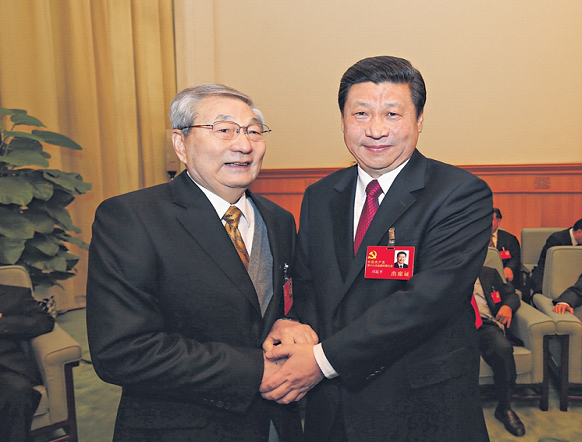
Experts trace the economic and security roots of Xi Jinping’s policies to the Great Western Development Strategy implemented under Zhu.
Much of the media coverage following former Chinese Premier Zhu Rongji’s death focused on his economic reforms and China’s entry into the World Trade Organization, largely overlooking their consequences for Uyghurs.
Experts interviewed by Uyghur News Network said the Great Western Development Strategy, announced under Jiang Zemin and implemented under Zhu, accelerated Uyghur economic dispossession and expanded Beijing’s reach. They called Xi Jinping’s Belt and Road Initiative a continuation and expansion of that framework.
The experts argue that policies implemented during Zhu’s tenure created parts of an economic and security framework that Xi later expanded into a system of mass detention and pervasive surveillance aimed at assimilation.
Zhu Rongji and the Great Western Development Strategy
Zhu Rongji served as vice premier from 1991 to 1998 and premier from 1998 to 2003. Jiang Zemin announced the Great Western Development Strategy in 1999. Covering 12 provincial-level areas, including the Uyghur region and Tibet, it was directed from 2000 by a State Council group led by Zhu.
Dr David Tobin of the University of Sheffield said: “The WDP was the precursor to the BRI and used state investment in large-scale infrastructure projects to extract resources from East Turkistan in order to provide cheaper energy in the east of China and employment for Han Chinese migrants.”
Many Uyghurs call the region East Turkistan; China calls it the Xinjiang Uyghur Autonomous Region.
Beijing says the program reduced poverty and raised living standards in the Uyghur region. The experts disputed the state narrative.
Tobin said the program’s gains did not address the inequality faced by Uyghurs.
“During this period, there was no improvement in development indicators for Uyghurs or Tibetans caused by these projects. As Ilham Tohti argued in his work, without addressing employment discrimination for Uyghurs, there are no available policy options to raise Uyghur incomes.”
Ilham Tohti, a Uyghur economist, was sentenced to life in prison on separatism charges in 2014.
Zhu’s restructuring of state-owned and collective enterprises led to mass layoffs. Dr Erkin Ekrem of Hacettepe University said the restructuring cost many Uyghurs their jobs as well.
“During his term, Zhu led large-scale reforms of state-owned enterprises, which caused approximately 30 million people working in state and collective enterprises across China to lose their jobs. Naturally, the indigenous peoples of East Turkistan were also affected, leaving many Uyghurs working in these enterprises unemployed,” Ekrem said.
Ilshat Hasan, research director at the Center for Uyghur Studies, said: “The benefits went exclusively to China and the Han settlers, while nothing reached the Uyghurs. On the contrary, the Uyghurs were pushed further into poverty.”
Document No. 7 and the Foundations of Repression
Document No. 7 predated the Great Western Development Strategy by three years. The Politburo Standing Committee adopted it in 1996. Zhu was one of its seven members, although his individual role is unknown.
Hasan highlighted the change in Beijing’s security language.
“Under Jiang Zemin, Document No. 7 was issued, designating ‘national separatists’—at the time, the term ‘terrorist’ was not yet used—as the primary threat to stability in East Turkistan.”
“Strike Hard” began as a national anti-crime drive in China. In 1996, authorities applied the campaign in the Uyghur region to people accused of “separatism” and “illegal religious activities.”
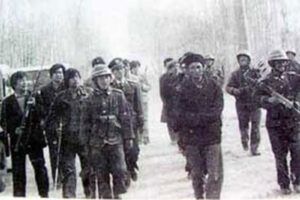
On Feb. 5, 1997, Uyghurs marched in Ghulja after restrictions on religion and Meshrep gatherings. Amnesty International said the protest began peacefully before security forces used lethal force. Beijing reported 10 deaths; Uyghur groups reported far more. Uyghurs call it the Ghulja Massacre.
Wang Lequan, who was regional party chief during the Ghulja crackdown, served in that position from 1994 to 2010.
Ekrem offered a more direct assessment of Zhu’s political support for Wang.
“During each of his visits to East Turkistan, Zhu supported and endorsed the repressive policies of Wang Lequan’s administration (1994–2010), emboldening the Urumqi government’s oppressive measures.”
A second ‘Strike Hard’ campaign followed in 2001. Authorities pressed for rapid arrests once ‘basic truth’ and ‘basic evidence’ were established, encouraging summary trials and mass sentencing, Human Rights Watch said.
Ekrem said Zhu linked development to national unity and stability while endorsing harsh measures against people branded threats to stability.
From Western Development to Xi’s BRI
Xi announced the BRI in 2013. The Uyghur region became a core route to Central Asia, using infrastructure developed under earlier programs.
Ekrem said: “Xi Jinping’s Belt and Road Initiative is an expanded version of the Great Western Development Strategy, leading to the further exploitation of East Turkistan’s aboveground and underground resources and the fundamental assimilation of the Uyghurs.”
Hasan also described the two policies as continuous.
“Both share the same target, strategy, plan, and interest: serving the Chinese state, government, and nation. Neither policy was ever intended to benefit the Uyghurs, the rightful owners of that land and its wealth.”
Tobin’s analysis of the Xinjiang Papers found Xi’s 2014 speeches made stability and security central to policy, the year Beijing launched its ‘People’s War on Terror.’
After Chen Quanguo became regional party secretary in 2016, authorities expanded surveillance and detention facilities. Beginning in 2017, China sent large numbers of Uyghurs and other Turkic peoples to internment camps and prisons amid forced labor and cultural erasure. In 2019, RFA cited Adrian Zenz’s estimate that up to 1.8 million Uyghurs and other Muslim minorities had been detained.
These programs weren’t mass detention on their own, but together, they laid the foundation that made it possible, and experts say Zhu bears some responsibility for that legacy.
“As Premier, Zhu Rongji was the implementer of these policies [WOP and security measures that followed], making it difficult to absolve him of responsibility,” Ekrem said.
Hasan went further, describing Zhu as “the main architect or initiator” of a continuous policy that culminated in what Hasan characterizes as genocide against the Uyghur people in later years.
The United States has determined that China’s treatment of Uyghurs constitutes genocide, and legislatures in several countries have adopted resolutions using that term. The U.N. human rights office did not make a genocide finding, but said the abuses may constitute crimes against humanity.
China denies genocide, crimes against humanity and forced assimilation. It says the policies target terrorism while promoting development and unity. The Chinese Embassy in Washington did not respond to Uyghur News Network‘s request for comment on the experts’ claims about Zhu’s policies.
Editor’s note: Interviews conducted in Uyghur and Turkish were translated into English. Quotations have been retained as supplied.



Be First to Comment