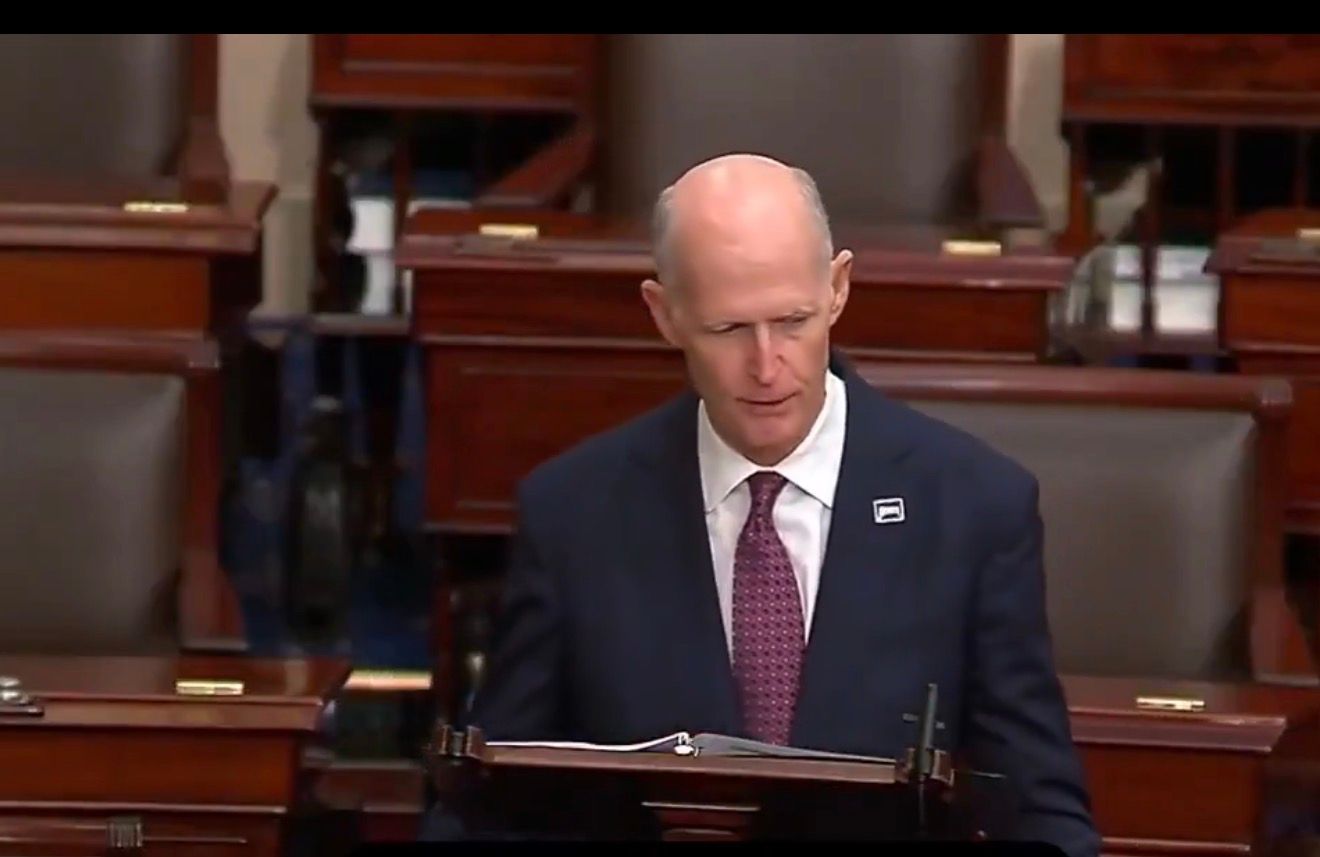
A resolution led by Sen. Rick Scott passed by voice vote, citing a genocide the United States first recognized in 2021.
By Uyghur News Network
WASHINGTON — June 18, 2026
The U.S. Senate has passed a resolution condemning Chinese leader Xi Jinping. It names the persecution of Uyghurs as genocide. And it calls their homeland by the name Uyghur advocates use: East Turkistan.
The resolution, S.Res.444, passed by voice vote on June 16, a day after Xi’s birthday. Sen. Rick Scott, Republican of Florida, introduced it last October. It sat in the Senate Foreign Relations Committee for eight months, then went straight to a floor vote without a committee hearing. It had no cosponsors and drew no recorded opposition.
The language is blunt by the standards of Senate resolutions. The title names the country — the People’s Republic of China — and brands Xi a “dictator.” Both are unusual for a chamber that often softens references to foreign leaders. Past measures on the Uyghurs tended to fault “the Government of the People’s Republic of China” in drier terms.
For Uyghurs, the key language is in the text itself. The resolution says that under Xi, the Chinese Communist Party is guilty of a modern-day genocide of the Uyghur people and other Muslim populations in the Xinjiang Uyghur Autonomous Region — “also known as East Turkistan.” That parenthetical is the rarer detail. The term is central to Uyghur claims of a distinct national identity, and it seldom appears in the text of a measure that clears Congress. Together, the choices set the resolution apart: it names the country, names the leader, and names the homeland.
The resolution makes further claims. It says the Party holds more than one million Muslim Uyghurs in prison and labor camps. It says the state assigns Han Chinese men to share the homes — and beds — of the wives of detained Uyghur men. It also notes that the genocide designation came first under President Trump in 2021 and was later confirmed by the Biden administration.
That designation came in the final hours of the Trump administration. On Jan. 19, 2021, Secretary of State Mike Pompeo determined that China’s actions against Uyghurs and other minorities in Xinjiang amounted to genocide and crimes against humanity. He said the United States was witnessing a systematic attempt to destroy the Uyghurs as a people. He dated the sharp escalation of repression to at least March 2017.
The finding held when the government changed. That same day, at his confirmation hearing, Antony Blinken — President Biden’s nominee for secretary of state — was asked whether he agreed that genocide had occurred. “That would be my judgment as well,” he said. The Biden administration upheld the determination. The label has since crossed two opposed White Houses, though it has limits. It is a determination by the U.S. government, echoed by several parliaments, not a ruling by an international court. In 2022, the United Nations human rights office said China’s actions in Xinjiang may amount to crimes against humanity, but stopped short of using the word genocide.
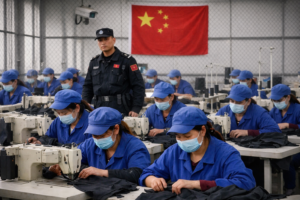
Beginning in 2017, China detained large numbers of Uyghurs and other Turkic peoples in a network of camps. Beijing called them voluntary job-training centers to counter extremism and denies any abuse. Former detainees and rights groups described them as internment camps — some say concentration camps — marked by forced indoctrination, abuse and pressure to abandon their religion and language.
In the resolution, the Uyghur clauses sit inside a long list of charges against Beijing. The text blames the Party for lying about the origins of COVID-19. It cites fentanyl deaths in the United States, predatory overseas lending, espionage, and secret “police stations” on American soil. It points to military pressure on Taiwan and the Philippines. It also names repression in Tibet and Hong Kong, the forced return of North Korean defectors, and the persecution of Christians.
In its operative section, the Senate does three things. It condemns Xi for deceit, for undermining peace and security, and for crimes against humanity. It declares solidarity with the people of China and others harmed by Party rule. And it urges the use of all available sanctions against Party officials, including under the Global Magnitsky Act. As a simple resolution, the measure carries no force of law. It binds the executive branch to nothing.
Scott chairs the Senate Special Committee on Aging and has a long record of anti-Beijing bills. He framed the vote in stark terms. “The CCP, especially under Xi Jinping’s tyranny, has a particular brand of evil,” he said in a statement.
“They seek to control the world, and in their mind, that means destroying anyone who stands in their way — whether it’s their own people or not.”
His office said the resolution passed “unanimously.” In fact it cleared the chamber by voice vote, a procedure that records no individual positions and is used for measures expected to face no objection.
The Senate has passed binding Uyghur laws before on human rights in 2020, on forced labor in 2021.
At least eight national parliaments have called China’s actions against Uyghurs genocide, crimes against humanity, or both — most in non-binding terms. The Senate’s move adds weight, not legal force.














Be First to Comment