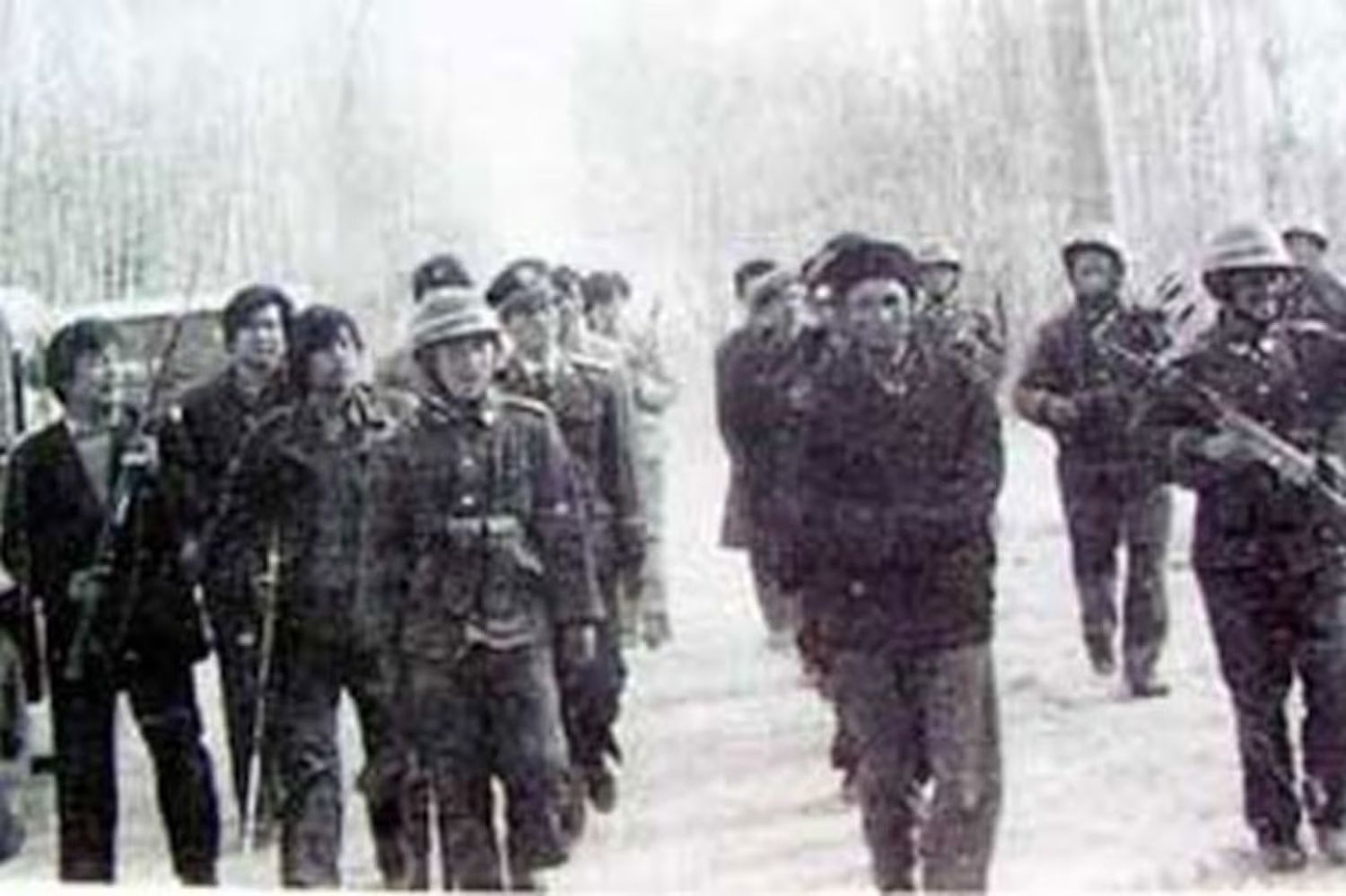
WASHINGTON, April 5, 2026 — Uyghur groups and communities marked the 36th anniversary of the 1990 Barin Uprising on Saturday with events in the United States, Canada and Europe, highlighting its historical significance and calling for international action over alleged atrocities in China’s Uyghur region.
Commemorations were held in Washington, D.C., and Edmonton, Alberta, organized in part by the East Turkistan Government in Exile (ETGE), while protests in Berlin and Munich were led by the World Uyghur Congress (WUC).
The uprising began in April 1990 in Barin Township, in Akto County near Kashgar, in what is officially known as the Xinjiang Uyghur Autonomous Region, called East Turkestan by Uyghurs.
It followed a period of unrest in the 1980s, including student demonstrations in 1985 and 1988 and broader dissatisfaction among Uyghurs over governance, economic conditions, demographic changes and family planning policies. Analysts say these tensions reflected deeper grievances tied to questions of autonomy, resource control and cultural identity.
According to the World Uyghur Congress, protests in Barin were triggered in part by opposition to forced abortions and sterilization policies. Demonstrators initially marched to local government offices before the situation escalated into clashes and, in some accounts, armed confrontation with Chinese security forces.
Chinese authorities have described the uprising as a violent, organized insurgency involving armed individuals and have framed it as part of separatist and terrorist activity.
Accounts of the crackdown differ significantly. The World Uyghur Congress says thousands Uyghurs were killed between April 5 and 10, 1990, and that thousands more were detained following a large-scale military response involving tens of thousands of troops. Chinese official figures have been significantly lower, though detailed data has not been widely disclosed, and no independent investigation has been conducted.
Turgunjan Alawdun, president of the World Uyghur Congress, said the uprising marked an early sign of broader resistance.
“We must honour those who lost their lives and seek accountability for all Uyghur victims who died defending fundamental freedoms,” he said in a statement.
In a statement marking the anniversary, Mamtimin Ala, president of the East Turkistan Government in Exile, said the uprising reflects an ongoing issue.
“This day does not belong to history alone,” he said. “It reflects a continuing struggle that has not been resolved.”
Analysts say the Barin Uprising became a reference point in how unrest in the region has since been characterized.
Separately, Asiye Uyghur, an independent observer, writing in a 2023 analysis, said that after the uprising, Chinese authorities increasingly categorized Uyghur resistance under what they call the “three evil forces” — terrorism, separatism and extremism.
She said this framework was reinforced during China’s reform era and later expanded in the context of global counterterrorism efforts after 2001, shaping both domestic policy and international narratives.
Observers say this classification has since been applied broadly to describe various forms of unrest and dissent in the region, often linking them to external organizations located in other countries, namely in Afghanistan or later years in Syria.
This official framing is detailed in the 2002 Chinese State Council White Paper, which explicitly categorizes the Barin Uprising as a “grave terrorist incident” orchestrated by the “East Turkistan Islamic Party.” The document asserts that the insurgents were “emboldened by the victory of the Afghan Mujahideen against the Soviet Union,” claiming that organizers established training camps and received ideological support from militant networks operating in Afghanistan and Pakistan. By attributing the 1990 events to the influence of international figures like Osama bin Laden, Beijing established a narrative link between local unrest and global extremist movements.
Hacettepe University associate professor Erkin Ekrem rejects the official narrative. Citing state media reports from the time the uprising was put down, he argues the evidence points to a locally rooted movement rather than an external one.
“China has presented documents indicating that the organizers sought to establish an independent East Turkistan,” he said. “This suggests it was not externally orchestrated, but a locally rooted movement with historical significance.”
Ekrem said the uprising should also be understood within a broader historical pattern.
“There have been numerous armed and political resistance movements against oppressive policies following China’s control of East Turkistan,” he said. “The independence movement in Barin Township was one of many such efforts carried out by Uyghurs throughout history.”
At events marking the anniversary, participants in North America and Europe called on governments to take stronger measures, including sanctions, accountability mechanisms and restrictions on goods linked to forced labor.
In 1949, China annexed East Turkestan following the collapse of the 1933 and 1944 republics. The 1944 leadership died in a mysterious Soviet plane crash before the takeover.
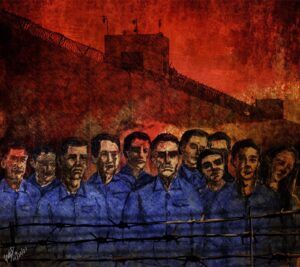
Decades later, Beijing’s “Strike Hard” campaign has targeted Uyghur culture through mass detention and surveillance. Despite resistance like the 1990 Barin uprising and and 2009 Urumqi protests, the crackdown surged in 2017. By late 2025, Human Rights Watch data indicated that while initial detentions peaked at one million, roughly 500,000 Turkic Muslims remain in prison.
A 2022 U.N. human rights office report found that abuses in Xinjiang may constitute crimes against humanity. In 2021, United States government has labeled China’s treatment of Uyghurs as genocide and crimes against humanity.
Beijing denies allegations of genocide and says its policies in the Xinjiang Uyghur Autonomous Region are aimed at countering extremism and promoting economic development.
Erkin Ekrem stated that the underlying drivers of unrest remain unresolved. Given the region’s history and the people’s deep connection to the land, future uprisings similar to Barin remain a possibility.
“I believe similar resistance movements could happen again,” he said. “For many Uyghurs, the issue is national, religious and historical, and it will not simply disappear.”

Mamatjan Juma is the Executive Director of Uyghur News Network (UNN) and a longtime newsroom leader with more than 18 years of experience in international journalism. He previously served as Deputy Director of Radio Free Asia’s Uyghur Service, where he managed editorial operations, standards, and cross-language workflows and helped guide major coverage of China’s mass detention system, forced labor networks, and the expanding surveillance state in the Uyghur region (East Turkestan).
Under his editorial leadership, RFA’s Uyghur Service received major journalism honors, including the Burke Award (2019) and the MINS Award for excellence in international broadcasting. Its reporting has been cited by major international outlets, helping shape global understanding of the crisis. Juma is fluent in Uyghur, English, Mandarin Chinese, and Uzbek, and also works as a translator.




Be First to Comment