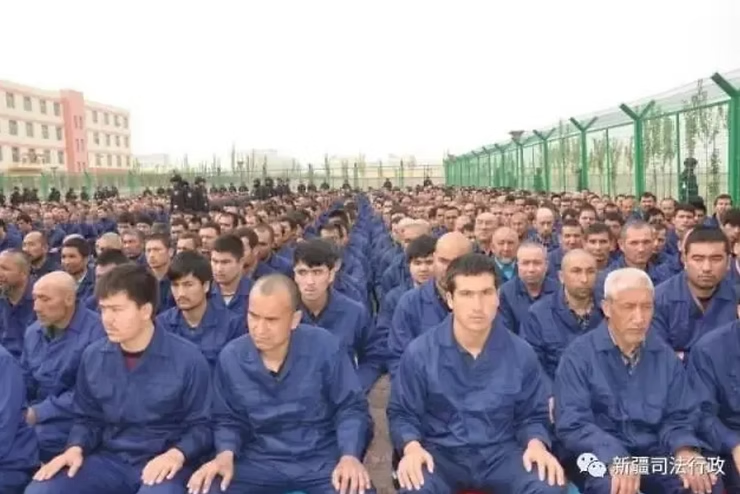
WASHINGTON (UNN) — Genocide Watch issued a “Genocide Emergency” alert on China’s Uyghur region, saying Chinese government policies toward Uyghurs and other Turkic Muslims now span multiple stages of genocide, including discrimination, persecution, extermination and denial, citing mass detention, pervasive surveillance and forced assimilation.
In its Dec. 20 report, the U.S.-based mass-atrocity prevention group said about “twelve million” people, “mostly Uyghur Muslims,” live in what China officially calls the Xinjiang Uyghur Autonomous Region, known to Uyghurs as East Turkestan, and that Beijing is pursuing policies aimed at assimilation, including expanded surveillance and restrictions on religion and language.
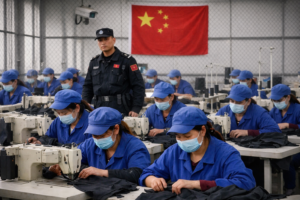
Genocide Watch said “800,000 to 2 million” Uyghurs have been detained since 2017 in what it describes as political “reeducation” facilities, alleging abuses that include forced indoctrination, physical abuse, sexual violence and cultural erasure. The group also pointed to forced labor risks in global supply chains and cited Volkswagen’s exit from operations in Urumqi amid sustained scrutiny of Xinjiang-linked production.
In its assessment, the organization said Chinese government restrictions on freedom of movement and religion, combined with pervasive surveillance targeting Uyghurs, amount to Stage 3: Discrimination under its “Ten Stages of Genocide” framework.
Genocide Watch said the mass detention and imprisonment of Uyghurs in political “reeducation” facilities constitutes Stage 8: Persecution, citing allegations of torture, coercive indoctrination and severe cultural repression.
The group further classified allegations of sexual violence against Uyghur women and the removal of Uyghur children into state-run Mandarin-only institutions as Stage 9: Extermination, which it said violates the U.N. Genocide Convention. It described China’s rejection of genocide allegations as Stage 10: Denial.
Genocide Watch also criticized what it described as international denial or minimization of abuses, including by some academics, arguing such responses contribute to impunity. The organization did not provide responses from those referenced.
China has repeatedly denied allegations of genocide, forced labor and mass detention in Xinjiang, describing its policies as counterterrorism and vocational training efforts aimed at preventing extremism.
Recommendations
Genocide Watch urged the United States and other governments to expand measures aimed at preventing complicity in abuses, including:
- Prohibiting imports of goods produced with Uyghur forced labor.
- Strengthening supply-chain tracing requirements for companies sourcing from China.
- Expanding humanitarian protection, asylum and resettlement options for Uyghurs abroad.
- Restricting investment in Chinese firms linked to forced labor.
- Barring exports of surveillance technology, including facial recognition and artificial intelligence systems, used in Xinjiang.
The situation in Xinjiang has been the subject of international scrutiny for years. In January 2021, the United States government formally determined that China’s treatment of Uyghurs and other Turkic Muslims in Xinjiang constituted genocide and crimes against humanity, a designation first made at the end of the first Trump administration and later upheld by the Biden administration.
Since then, a growing number of Western legislatures have adopted similar resolutions. Parliaments or legislative bodies in Canada, the United Kingdom, France, the Netherlands, Lithuania and the Czech Republic, among others, have recognized China’s actions in Xinjiang as genocide or crimes against humanity, citing mass detention, forced labor, coercive population controls and the separation of Uyghur children from their families.
Founded by genocide scholar Gregory Stanton, Genocide Watch monitors atrocity risks worldwide using early-warning models such as the Ten Stages of Genocide and coordinates the international Alliance Against Genocide, a coalition focused on prevention, policy action and accountability for mass atrocities.

Mamatjan Juma is the Executive Director of Uyghur News Network (UNN) and a longtime newsroom leader with more than 18 years of experience in international journalism. He previously served as Deputy Director of Radio Free Asia’s Uyghur Service, where he managed editorial operations, standards, and cross-language workflows and helped guide major coverage of China’s mass detention system, forced labor networks, and the expanding surveillance state in the Uyghur region (East Turkestan).
Under his editorial leadership, RFA’s Uyghur Service received major journalism honors, including the Burke Award (2019) and the MINS Award for excellence in international broadcasting. Its reporting has been cited by major international outlets, helping shape global understanding of the crisis. Juma is fluent in Uyghur, English, Mandarin Chinese, and Uzbek, and also works as a translator.





Be First to Comment