
By: Mamatjan Juma
After speaking publicly about Uyghurs, a Paris-based musician received a Signal call from Urumqi, the capital of Uyghur Autonomous Region. What followed was not a threat, but something quieter — and harder to ignore.
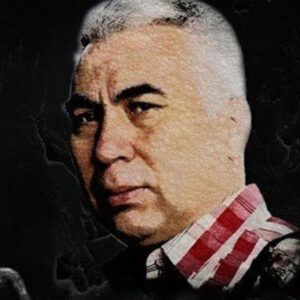
When Mirkamil Turghun’s phone rang on Signal, the caller appeared only as a partially obscured contact, with the number hidden. The voice on the line said he was calling from Urumqi — a detail that immediately clarified the situation for Mr. Turghun, a 42-year-old Uyghur musician living in Paris.
“I don’t use WeChat,” Mr. Turghun later said in an interview with Uyghur News Network (UNN), referring to WeChat as China’s primary messaging platform. “If someone calls using Signal from Urumqi, that’s nobody but police.”
The man on the phone did not explicitly identify himself as a police officer. Instead, he spoke with familiarity about Mr. Turghun’s family, his school years and his public advocacy, urging him to reconsider his involvement. The 23-minute conversation, which Mr. Turghun recorded, offers a rare glimpse into how Chinese authorities, he believes, reach Uyghurs abroad — quietly, personally and beyond China’s borders.
Mr. Turghun has long been involved in Uyghur artistic expression abroad and has not shied away from publicly criticizing Chinese policies in earlier cultural and media appearances.
“It was the first direct call via Signal,” Mr. Turghun said in the UNN interview. “I had received other written messages on Instagram or WhatsApp. It’s a very ‘friendly’ kind of harassment.”
A Call That Knew His Past — and Implied the Rest
From the outset, the caller emphasized shared identity. He reminisced about school days at No. 17 Middle School in Urumqi and about music Mr. Turghun had played years earlier.
“I have always known you because you play music,” the caller said in the recording. “So I have a certain rapport towards you.”
He repeatedly urged Mr. Turghun not to see him as an official.
“Don’t ever see me like your enemy,” the caller said. “Don’t think of me as a government official. Just think of me as an ordinary guy.”
Mr. Turghun pushed back.
“We don’t really know each other,” he said on the call. “I don’t understand why someone I don’t know would want to do right by me.”
The caller soon turned to Mr. Turghun’s advocacy, portraying it as futile.
“At the end these things won’t amount to anything,” he said. “I see you guys as a pawn in a political game.”
When Mr. Turghun said he was simply describing what was happening to Uyghurs, the caller urged him to doubt accounts he had heard.
“You have not seen it with your own eyes,” the caller said. “You can’t just base your ideas on what’s being published by Eastern or Western countries.”
Mr. Turghun replied that he had spoken directly with the woman who had been detained. The caller dismissed their testimony, attacking the credibility of a former camp detainee now living in Europe.
“She’s all talk,” the caller said. “If she doesn’t go on stage and become an actress, where would her money come from?”
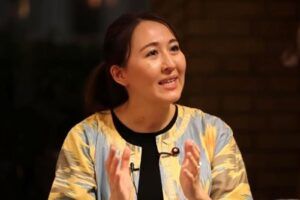
Dilnur Reyhan, a senior researcher at the Oriental Institute of the Czech Academy of Sciences, said the exchange reflected a familiar pattern.
“This is how China’s transnational repression works,” she said. “It relies on implication, family pressure and familiarity rather than explicit threats.”
Family as Leverage
Again and again, the conversation returned to one subject: family.
The caller raised Mr. Turghun’s parents early, then circled back repeatedly, invoking age, regret and the finality of time.
“Your father is in his 80s,” the caller said. “People should be able to see their loved ones while they are alive.”
At one point, as the caller pressed him about reconciliation, Mr. Turghun rejected the appeal outright. The exchange is audible on the recording.
“Tell my family to forget about having a child like me,” Mr. Turghun said. “The time for crying is over.”
In his interview with UNN, Mr. Turghun said the focus on family was deliberate.
“Because he knows that the bond in my family is very strong,” he said. “It’s also our weakness, their tool.”
Human rights researchers say family ties are among the most effective tools used to pressure Uyghurs abroad. Relatives in China are often summoned by police, questioned or warned. In some cases they are detained; in others, silence is secured without a single explicit threat.
Mr. Turghun said the tone of the call was restrained compared with what others had endured.
“I’ve heard far worse things through people I know in the diaspora,” he said in the interview. “I have received much more horrible messages about my family’s situation. What he said that day was nothing.”
Cutting Ties to Protect the Ones Left Behind
Years earlier, Mr. Turghun decided to cut off contact with his family in China, a choice he said was meant to shield them from retaliation.
“I wanted no intermediaries,” he said. “I wanted to deal with them directly.”
During the call, the caller offered to act as a “bridge” — someone who could reassure Mr. Turghun’s parents or resolve what he described as misunderstandings.
“There’s nothing that cannot be resolved in this world,” the caller said.
“There’s a lot that cannot be resolved,” Mr. Turghun replied.
When asked whether he might return if pressures were lifted, Mr. Turghun was unequivocal.
“No,” he said. “I don’t even want to go back.”
Later, in the interview, he explained why the choice felt meaningless.
“I could probably go and see my family and come back as if nothing had happened or end up directly in jail,” he said. “For me, both are the same.”
Beyond Borders
China’s policies toward Uyghurs and other Turkic peoples in the Uyghur Autonomous Region — an area the Chinese government calls Xinjiang, but which many Uyghurs and scholars refer to as East Turkistan — have drawn sustained international scrutiny.
In an August 2022 assessment, the United Nations Office of the High Commissioner for Human Rights said China’s actions may constitute crimes against humanity, citing mass detention, intrusive surveillance, family separation and forced labor. Beijing rejected the findings.
The United States government has formally designated China’s treatment of Uyghurs as genocide. Several national parliaments, including France’s, have adopted resolutions using the same term, though such votes are symbolic and non-binding.
On Jan. 20, 2022, the French National Assembly passed a resolution recognizing the persecution of Uyghurs as genocide.
A Pattern in France
Ms. Reyhan said Mirkamil’s case was not isolated. She said she was aware of other Uyghurs in France who had received similar contacts but were unable to record them.
She noted that such outreach often intensifies around public or symbolic moments. The European Uyghur Institute opened its Paris office on Jan. 20, a date marking the anniversary of the French Parliament’s genocide resolution.
Ms. Reyhan pointed to the attempted kidnapping of Gulbahar Jalilova, a former camp detainee now living in Paris, reported by Le Monde in 2024, and to legal complaints she and supporters describe as judicial harassment, as part of a broader climate of pressure on Uyghur activists in France.
Choosing to Speak
The Signal account used the name “Dilyar,” though Mr. Turghun said the identity could not be independently verified. The call took place on Jan. 19, hours after he had spoken on a French radio station about the Uyghur situation.
After the call ended, Mr. Turghun replayed the recording several times. He then decided to make it public.
The recording was first published by Kashgar Times, an independent Uyghur news outlet.
“I wanted people to hear how this actually sounds,” he said. “Not the shouting or the threats people imagine — but the calm voice, the pressure hidden inside ordinary words.”
The call ended politely. The pressure did not.
Still, he said, distance had not erased his sense of connection to the family he left behind.
“They are surely disappointed in me,” Mr. Turghun said, “but I know they love me.”
Edited:

Mamatjan Juma is the Executive Director of Uyghur News Network (UNN) and a longtime newsroom leader with more than 18 years of experience in international journalism. He previously served as Deputy Director of Radio Free Asia’s Uyghur Service, where he managed editorial operations, standards, and cross-language workflows and helped guide major coverage of China’s mass detention system, forced labor networks, and the expanding surveillance state in the Uyghur region (East Turkestan).
Under his editorial leadership, RFA’s Uyghur Service received major journalism honors, including the Burke Award (2019) and the MINS Award for excellence in international broadcasting. Its reporting has been cited by major international outlets, helping shape global understanding of the crisis. Juma is fluent in Uyghur, English, Mandarin Chinese, and Uzbek, and also works as a translator.




Be First to Comment