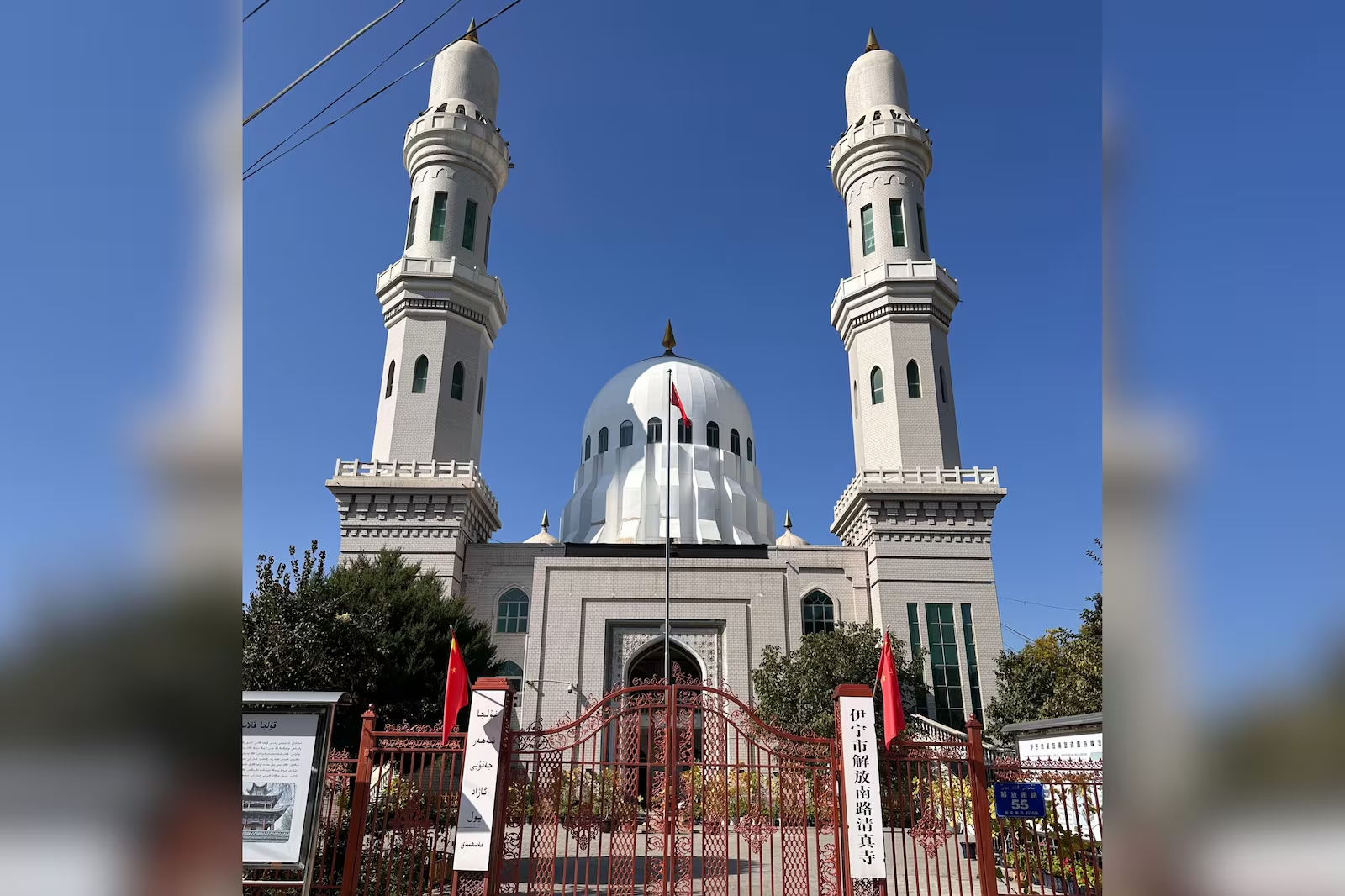
WASHINGTON — The United States criticized China after reports that Beijing plans to demolish the historic Beytulla Mosque in Ghulja in Xinjiang, where many Uyghurs refer to the wider region as East Turkestan.
The mosque is one of the region’s oldest Islamic landmarks and stands in an area where Washington says Beijing is committing genocide against Uyghurs.
The reaction comes ahead of a planned visit by the U.S. president to China in late March, when he is expected to meet Xi Jinping, general secretary of the Chinese Communist Party.
In a statement shared with the Uyghur News Network, a spokesperson for the United States Department of State said China has targeted religious sites across the country, including historic mosques in Xinjiang.
“Chinese authorities have closed, destroyed, or dismantled various houses of worship and religious sites across the country, including historic mosques in Xinjiang, seeking to erase religious belief and practices from public life. This is in line with their policy of forced assimilation,” the spokesperson said.
The spokesperson linked the destruction of religious sites to Washington’s broader findings about Beijing’s treatment of Uyghurs.

“The United States has determined the CCP is committing genocide and crimes against humanity against Uyghurs and other ethnic and religious minorities in Xinjiang.”
Chinese officials reject those accusations. In previous briefings, the Ministry of Foreign Affairs of the People’s Republic of China said claims of genocide and religious persecution in Xinjiang are “fabricated” and that people of all ethnic groups enjoy freedom of religious belief under Chinese law.
Uyghur advocacy groups dispute that position.
“The Chinese regime aims to eradicate the Uyghurs. To destroy a nation, one must destroy its language, religion, and culture. This is part of that process,” said Turgunjan Alawudun, president of the World Uyghur Congress.
Confirmation on the Ground
Reports of the demolition began circulating last week after videos appeared online claiming the mosque would be torn down.
The reports were later confirmed by Radio Free Asia through phone calls with local authorities.
Officials in Ghulja, located in northern Xinjiang, acknowledged the demolition plan.
An employee from the Ili Prefecture United Front confirmed it during a phone call.
“Yes, it is true.”
Another official, from the Ghulja City Religious Affairs Office, said the demolition had already been ordered.
“We have the order and it will be demolished within this month.”
A Pillar of Cultural Memory
The Beytulla Mosque is widely regarded as one of the most important historic mosques in the area.
It was first built in 1760 and expanded in 1865. The structure survived decades of political upheaval and was renovated again in 1981. In recent years, local Uyghur entrepreneurs helped modernize parts of the building.
For many Uyghurs, mosques serve not only as places of worship but also as spaces for learning and community life. Researchers say the destruction of such sites does more than remove historic buildings — it also erases parts of the region’s cultural memory.
Systematic Alterations
The demolition in Ghulja appears to fit a broader pattern.
Investigations by the Uyghur Human Rights Project and reporting by The New York Times have documented widespread damage and demolition of mosques and other religious sites across Xinjiang since 2017. In many cases, domes and minarets were removed or buildings were repurposed. A UHRP report found that thousands of mosques and shrines across the region have been damaged or demolished.
These changes are often linked to Beijing’s campaign to “Sinicize” religion, an effort to bring religious institutions more closely in line with Communist Party ideology.
The comments also come as China has adopted new legislation promoting what it calls “ethnic unity,” a policy critics say encourages assimilation of non-Han cultures into the dominant Han Chinese identity.
Rights groups and researchers say the campaign has also targeted Uyghur language and intellectual life. Uyghur-language instruction was removed from many schools. Books written in Uyghur were reportedly destroyed. Prominent scholars and intellectuals were detained. Researchers estimate that more than one million Uyghurs and other Turkic peoples have been held in camps and detention facilities since 2017.
Later in the statement, the State Department said Beijing’s policies toward religion reflect deeper ideological hostility rooted in Communist Party doctrine.
“Consistent with its Marxist-Leninist worldview, the CCP disregards religious freedom and displays hostility toward religious groups and the concept of religion itself,” the spokesperson said.
The United States first determined that China was committing genocide and crimes against humanity against Uyghurs and other Muslim minorities in January 2021, during the final days of the administration of Donald Trump. The determination was later upheld by the administration of Joe Biden.
Reporting by Mamatjan Juma for Uyghur News Network. Confirmation of the demolition plan was obtained through reporting by Radio Free Asia.




Be First to Comment