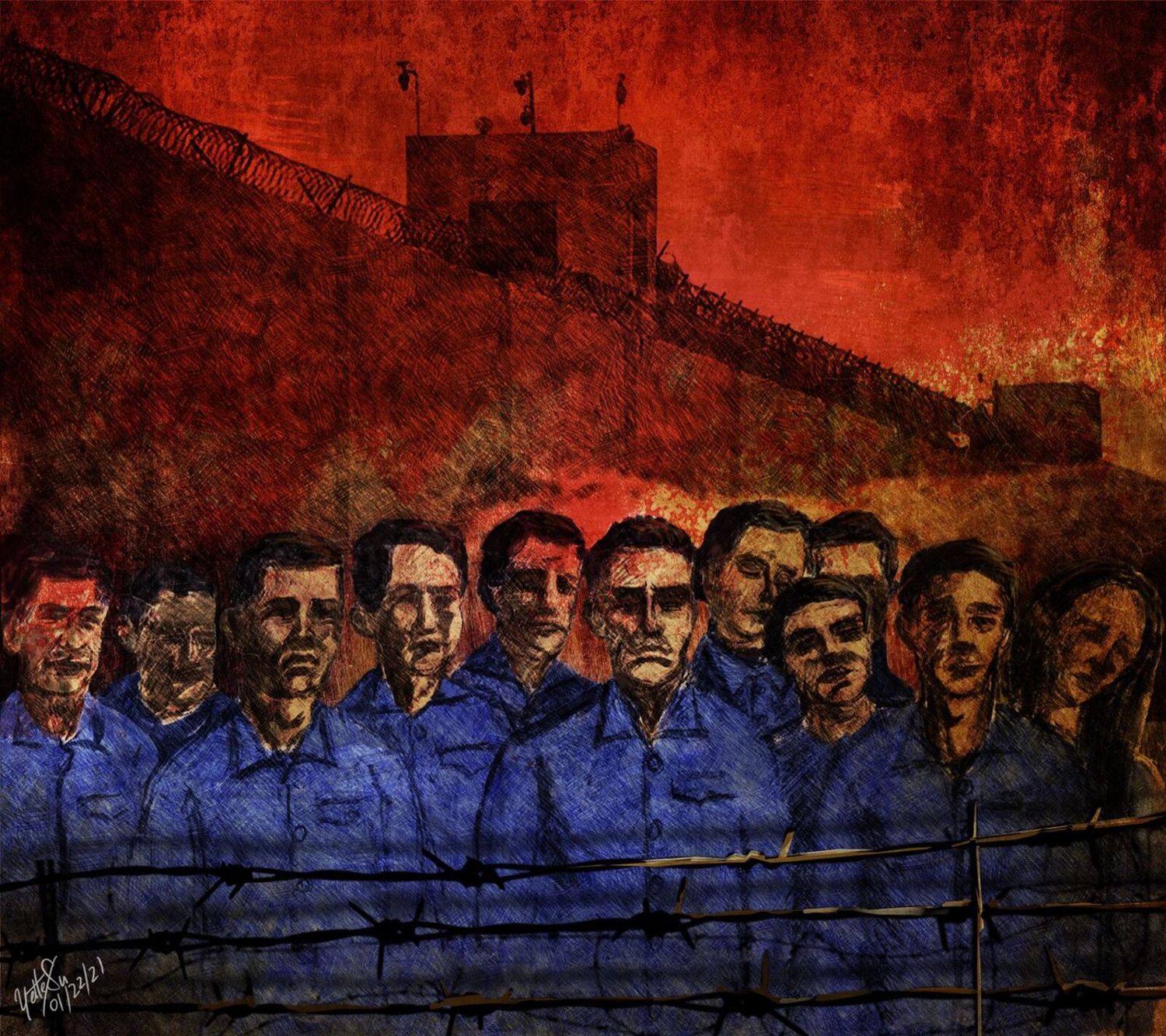
WASHINGTON (UNN)— For many Uyghur families separated by imprisonment, surveillance, or exile, the question is no longer whether repression will ease but whether it has become permanent.
That concern is echoed in the newly released World Report 2026 by Human Rights Watch. The report warns that the global human rights system is entering a period of profound strain and places China among the major powers reshaping, and in some cases weakening, long-standing international norms.
Against that backdrop, the situation facing Uyghurs stands out. Rights groups describe it as one of the clearest examples of modern state repression becoming institutionalized.
In a landmark 2021 investigation, Human Rights Watch found that “the Chinese government is committing crimes against humanity against Uyghurs and other Turkic Muslims in Xinjiang.”
In its new report, the organization states plainly that “there has been no accountability for crimes against humanity in Xinjiang where several hundred thousand Uyghurs remain unjustly imprisoned.”
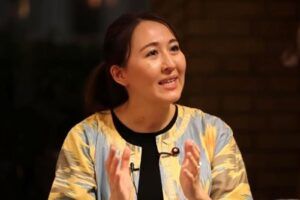
“The Xi Jinping regime sees difference as a threat and therefore forces Uyghurs to assimilate into Han Chinese culture, society, and language,” said Yalkun Uluyol, a China researcher at Human Rights Watch.
The report and Uluyol’s remarks point in the same direction. What began as a sweeping security crackdown as early as 2016 in the region may be evolving into a more durable system. It is aimed not only at controlling a population but at reshaping identity itself.
From Security Campaign to Identity Engineering
The China chapter notes that “tightened Chinese Communist Party ideological control has been accompanied by harsh forced assimilation of Tibetans and Uyghurs,” reinforcing concerns that Beijing’s policies extend beyond security into cultural transformation.
“Beijing’s imposed ideological uniformity, with escalated repression since the Strike Hard campaign and Sinicization over a decade ago, has not only marginalized but also criminalized the expression of Uyghur identity and culture,” Uluyol said.
Launched in 2014, the “Strike Hard Campaign Against Violent Terrorism” expanded surveillance, policing, and detention across Xinjiang, marking what many researchers view as a turning point in Beijing’s approach to the region.
Authorities, he added, have “massively incarcerated prominent Uyghur scholars, religious leaders, storytellers, singers, and intellectuals simply for being Uyghur.”
Analysts say targeting cultural figures can signal a broader objective. It can weaken the social infrastructure of a community by eroding language, memory, and collective identity.
Uluyol cited reports of banned Uyghur songs and documented changes to historic village names. He described them as part of a broader assimilation campaign.
“These are part of a broader campaign against Uyghurs and their distinct identity,” he said.
HRW: Crimes Against Humanity in the Region Are Ongoing
Human Rights Watch writes that the Chinese government’s crimes against humanity in the region are ongoing, even as some reports indicate that political re-education camps have been reduced.
“The Chinese government’s crimes against humanity in the Uyghur region are ongoing,” Uluyol said. “Although some reports suggest the closure of political re-education camps, hundreds of thousands remain in prison.”
In 2022, the United Nations Office of the High Commissioner for Human Rights concluded that abuses in Xinjiang “may amount to international crimes, in particular crimes against humanity,” Chinese authorities continue to deny wrongdoing.
“There has been no accountability for the crimes Beijing has committed against Uyghurs,” Uluyol said.
Citing government figures, he added that authorities recorded more than 16 million instances of rural labor transfers in the region over the past five years. That scale suggests millions may have been affected by systemic, state-imposed forced labor programs.
Researchers increasingly interpret such programs as mechanisms of long-term social control rather than purely economic initiatives.
A Closed Information Environment
The report further observes that the Chinese government “controls all major channels of information and implements one of the world’s most stringent surveillance and censorship regimes,” conditions that rights groups say enable sweeping restrictions on Uyghur cultural, religious, and social life.
“The government does not allow independent experts to visit the region,” Uluyol said.
Restrictions extend even to members of the Uyghur diaspora hoping to reunite with relatives.
“It imposes severe conditions on Uyghurs in exile who wish to go back for family visits,” he said. “Even worse, it organizes propaganda tours and forces them to produce propaganda to whitewash its crimes.”
The result, he added, is a pervasive “state of fear,” reinforced by curated messaging and global influence operations.
Forced Labor and Global Supply Chains
The report points to continuing investigations into forced labor and state-sponsored labor transfer programs affecting Uyghurs. It warns that international supply chains remain exposed, including sectors such as electronics, automobiles, footwear, sportswear, and critical minerals.
Separate U.N. experts in early 2026 also raised alarm about alleged state-imposed forced labor involving Uyghurs and other minorities across multiple provinces.
Pressure Beyond China’s Borders
Human Rights Watch has also warned of intensifying transnational repression. It cites harassment of relatives inside China and punishment of individuals who return.
For many Uyghurs living overseas, activism can carry consequences beyond the speaker. Parents, siblings, and friends can face pressure at home. State leverage can extend far beyond China’s borders.
Uluyol described a climate shaped by global influence operations alongside tactics critics say are designed to silence dissent abroad.
A Difficult Moment for Accountability
Despite mounting documentation, Uluyol said the current geopolitical climate complicates coordinated pressure.
“Under the current international environment, it is difficult to talk about human rights,” he said.
He argued that some governments increasingly view Beijing as a stabilizing partner amid global uncertainty.
“We should tell those governments that Xi is no better alternative,” he said.
Uluyol urged governments to continue pressing China to end abuses. He called for stronger enforcement to block forced-labor imports. He also urged protection for residents facing cross-border intimidation and support for Uyghur civil society groups.
“Concerned governments should ensure Uyghurs’ safety globally,” he said.
Nearly a Decade On, A System Designed to Endure
The World Report 2026 frames today’s rights landscape as part of a broader democratic recession. It warns that the rules-based international order is under mounting pressure from powerful states, including China.
For Uyghurs, however, the implications are intensely personal. Nearly a decade after repression intensified, the emerging picture described by rights researchers is not of a campaign winding down. It is one settling into permanence. A system designed not merely to silence dissent, but to outlast it.






Be First to Comment