
LONDON (UNN) — China under President Xi Jinping is “not a credible alternative” for Britain’s long-term interests, Human Rights Watch said Tuesday, urging Prime Minister Keir Starmer to raise human rights concerns during his upcoming visit to China.
In a statement released ahead of the trip, the rights group warned against prioritizing trade and diplomatic reset while sidelining human rights, saying such an approach would leave the UK vulnerable to pressure from Beijing.
“Xi Jinping’s China is not a credible alternative,” Human Rights Watch said.
Starmer is due to visit China from Jan. 28 to Jan. 30, with planned stops in Beijing and Shanghai, where he is expected to meet President Xi Jinping and Premier Li Qiang, according to the BBC.
Human Rights Watch said the timing of the trip was “troubling,” coming weeks after a Hong Kong court convicted British citizen and media tycoon Jimmy Lai on what it described as “bogus ‘national security’ charges.”
Lai faces a possible life sentence. Human Rights Watch said he was prosecuted for peacefully exercising rights protected under Hong Kong’s Basic Law and the 1984 Sino-British Joint Declaration.
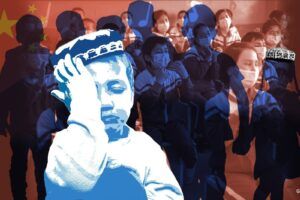
Human Rights Watch said repression across China has intensified under Xi’s leadership. In Hong Kong, the group said, Beijing has dismantled political freedoms promised under the “one country, two systems” framework. In Xinjiang, China’s far-western region — which many Uyghurs refer to as East Turkistan — “Chinese authorities are committing crimes against humanity against Uyghurs,” the group said.
The abuses include arbitrary detention, mass surveillance, cultural and religious persecution, and family separation, the group said.
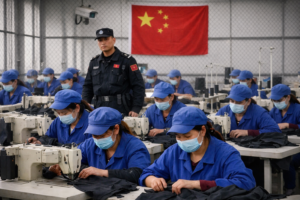
Human Rights Watch also warned that Britain risks becoming a weak link in global supply chains tied to forced labor. Unlike the United States and the European Union, the UK lacks strong import controls, leaving it exposed to goods produced through state-imposed forced labor in sectors including cotton, solar energy, automotive manufacturing, and critical minerals.
United Nations human rights experts said last week that Chinese state-run labour transfer programs targeting Uyghurs and other groups may amount to crimes against humanity.
“Prioritizing economic engagement over human rights concerns leaves the UK vulnerable to pressure that, ultimately, undermines its own interests,” the statement said.
The group said China’s abuses increasingly extend beyond its borders, citing cases of transnational repression in the UK, including harassment of Hong Kong activists and pressure on universities and researchers examining forced labor in China.
“While in Beijing, Starmer’s delegation should engage with China within the guardrails of British interests and values, of which human rights are central,” Human Rights Watch said.
It urged Starmer to raise forced labor during trade talks, press for an end to abuses in Xinjiang, challenge Hong Kong’s national security regime, call for Jimmy Lai’s release, and address transnational repression on British soil.
Broader Pattern
The appeal follows similar warnings issued last week by Human Rights Watch ahead of other leaders’ visits to China. In a separate statement, the group urged Finnish Prime Minister Petteri Orpo to raise Uyghur forced labor during his own trip, warning that economic engagement without pressure on rights risks normalizing abuse.
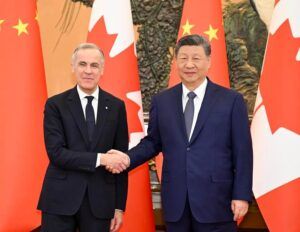
Rights advocates have also cited Canada’s recent engagement with Beijing as a cautionary example. During Mark Carney’s mid-January visit to China, they said officials focused on economic ties and did not publicly address China’s mass detention and forced labor of Uyghurs, despite Parliament recognizing the abuses as genocide in 2021.
Human Rights Watch said Britain retains significant diplomatic and economic leverage and has long been among the more vocal international advocates for human rights in Hong Kong, Xinjiang, Tibet, and elsewhere in China.
China did not immediately respond. The Foreign Ministry has previously said Xinjiang and Hong Kong are internal matters and opposes what it calls external interference.
“Human rights are critical to a healthy long-term Sino-British relationship,” the group said.














Be First to Comment