WASHINGTON (UNN)— China continues to impose forced labor on Uyghurs and other Turkic minorities and to expand surveillance and repression, according to a new report from a bipartisan congressional commission.
The 2025 Annual Report of the Congressional-Executive Commission on China (CECC) says the Chinese Communist Party has repeatedly violated its commitments on human rights, labor and the rule of law, despite public pledges to follow international standards.
“This year’s report lays bare how the Chinese Communist Party keeps breaking its word—to its own people and to the world,” said Sen. Dan Sullivan, R-Alaska, the commission’s chair.
Forced Labor in Uyghur Region
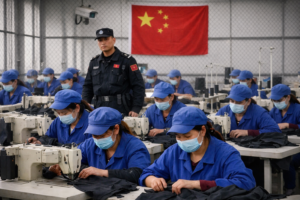
The report finds that state-imposed forced labor continues to expand in the Xinjiang Uyghur Autonomous Region.
Authorities are pressuring Uyghurs and other Turkic Muslims into coerced work programs, the commission said. Many are transferred from rural livelihoods into factory jobs. Others lose land to state-run cooperatives and developers.
The executive summary says forced labor linked to Uyghurs continues to enter global supply chains, including products sold in the United States.
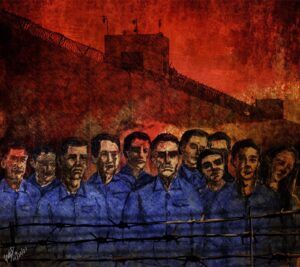
In earlier reports, the commission documented how China shifted much of its Uyghur crackdown from mass internment camps into courts, prisons and forced labor programs. The 2025 report says those systems have since expanded and become more entrenched.
Broken Promises on Autonomy
The report is framed around the theme “Promises Made, Promises Broken.”
The commission says Beijing has failed to honor pledges of autonomy and basic rights. In Xinjiang, promises of autonomy have instead led to mass detentions and constant surveillance, the report says.
Authorities use laws, courts and police powers to enforce political control, the commission said.
Religion and Daily Life
The report documents systematic repression of religious and ethnic communities, including Uyghur Muslims.
Officials have carried out mosque “rectifications,” expanded boarding schools for minority children and imposed intrusive surveillance. In some Uyghur towns, residents were required to record themselves eating during Ramadan to prove they were not fasting.
Repression Abroad
A new chapter documents how China extends repression beyond its borders.
The commission cites harassment of diaspora communities, threats against overseas activists and the operation of covert “overseas police” service stations. It also points to U.S. law-enforcement cases involving unregistered Chinese agents.
“Beijing signs human rights conventions and promises autonomy,” Sullivan said, “then jails dissidents, runs forced-labor factories and even dispatches agents to stalk and threaten people on American soil.”
Technology and Surveillance
The report says China is using technology to strengthen repression.
Artificial intelligence, mass data platforms and censorship tools are embedded in government systems and exported abroad. The commission warns that these tools allow other governments to copy China’s model of digital control.
Political Prisoners
The commission’s Political Prisoner Database now lists 11,262 political and religious prisoners in China.
Of those, 2,755 are active cases, meaning the individuals are believed to be currently detained or under coercive control.
Calls for Action
The report urges stronger enforcement of the Uyghur Forced Labor Prevention Act and action against forced labor in China’s seafood industry. It also calls for measures to counter transnational repression and forced organ harvesting.
Rep. Chris Smith, R-N.J., the commission’s cochair, said China poses a broader challenge.
“Sadly, the People’s Republic of China under the Communist Party has proven time and again that it seeks to impose the same tyranny it inflicts on its own citizens,” Smith said.
Looking Ahead
Sullivan said the report is meant to guide policy.
“This report doesn’t just catalogue abuses,” he said. “It provides a blueprint to defend workers, protect supply chains and hold the Chinese Communist Party accountable.”

Mamatjan Juma is the Executive Director of Uyghur News Network (UNN) and a longtime newsroom leader with more than 18 years of experience in international journalism. He previously served as Deputy Director of Radio Free Asia’s Uyghur Service, where he managed editorial operations, standards, and cross-language workflows and helped guide major coverage of China’s mass detention system, forced labor networks, and the expanding surveillance state in the Uyghur region (East Turkestan).
Under his editorial leadership, RFA’s Uyghur Service received major journalism honors, including the Burke Award (2019) and the MINS Award for excellence in international broadcasting. Its reporting has been cited by major international outlets, helping shape global understanding of the crisis. Juma is fluent in Uyghur, English, Mandarin Chinese, and Uzbek, and also works as a translator.


Be First to Comment