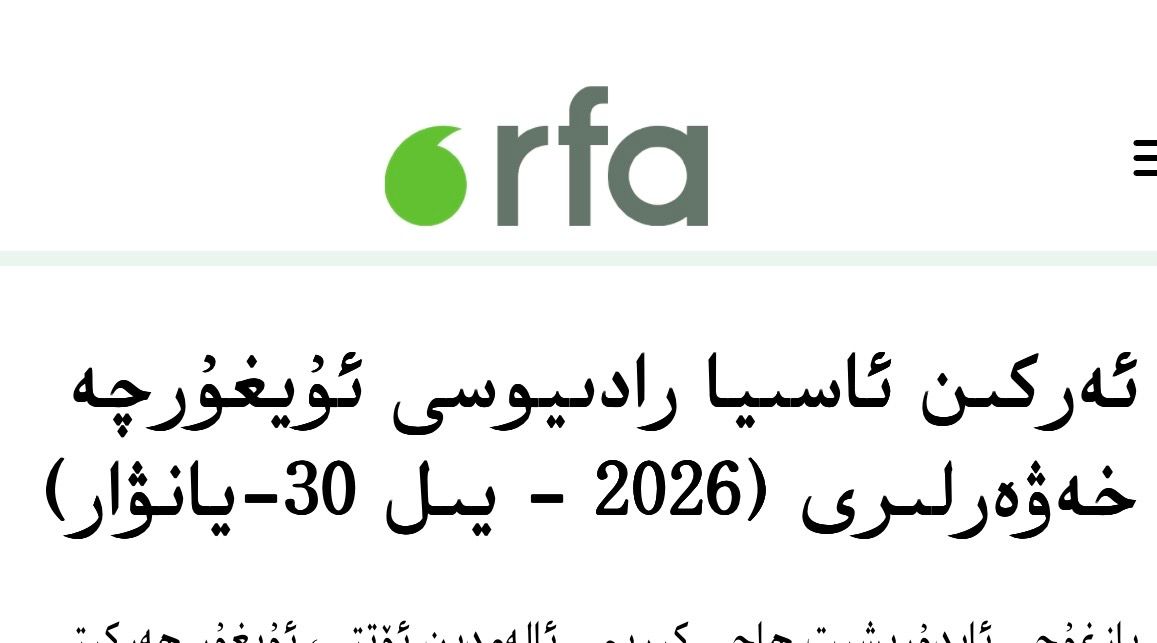
WASHINGTON (UNN) — Radio Free Asia has published three short Uyghur-language news items, marking its first Uyghur-language reporting since the service was shut down in May 2025.
The posts, dated January 30, end an eight-month silence that followed the closure of one of the most important independent Uyghur-language news services in the world.
Before it was closed, RFA’s Uyghur service broadcast up to 60 minutes of radio programming daily, much of it transmitted by shortwave radio into China’s Uyghur region, where independent journalism is banned and internet access is tightly controlled. The service was established in 1998 and for years served as a rare source of uncensored news for Uyghur audiences inside China.
The shutdown had immediate human consequences. Uyghur reporters and editors lost their jobs, overseas bureau was closed, and a newsroom built over decades was dismantled almost overnight. Some former staff members had already been living under pressure from transnational repression, facing surveillance, harassment, and threats linked to their work.
Several journalists had relatives in China who were sentenced, or otherwise targeted by authorities because of their reporting for RFA, according to former staff and human-rights researchers. For many, the closure of the service did not end the risks they carried — it only removed the platform they had worked to protect.
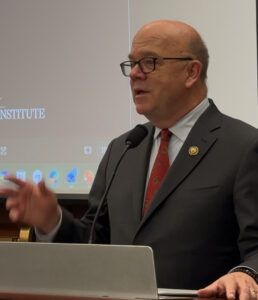
Earlier this month, RFA President and CEO Bay Fang said the broadcaster plans to restore shuttered language services, including Uyghur and Tibetan, according to an attendee at a public event in Washington.
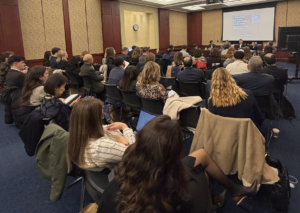
Fang made the remarks on January 22 during a panel discussion titled “Why Radio Free Asia and Radio Free Europe/Radio Liberty Matter for America,” hosted by the Hudson Institute. She did not provide a timeline or details on how the restoration would proceed.
RFA has not said whether the January 30 items mark the start of a sustained restart or a limited step. The reports were brief and did not indicate a return to daily radio broadcasts or investigative coverage.
Still, for Uyghur audiences — and for former journalists who spent years reporting under pressure — the return of any Uyghur-language content ends a silence that many feared would become permanent.

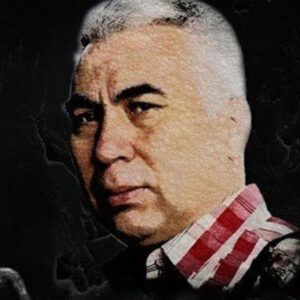
Mamatjan Juma is the Executive Director of Uyghur News Network (UNN) and a longtime newsroom leader with more than 18 years of experience in international journalism. He previously served as Deputy Director of Radio Free Asia’s Uyghur Service, where he managed editorial operations, standards, and cross-language workflows and helped guide major coverage of China’s mass detention system, forced labor networks, and the expanding surveillance state in the Uyghur region (East Turkestan).
Under his editorial leadership, RFA’s Uyghur Service received major journalism honors, including the Burke Award (2019) and the MINS Award for excellence in international broadcasting. Its reporting has been cited by major international outlets, helping shape global understanding of the crisis. Juma is fluent in Uyghur, English, Mandarin Chinese, and Uzbek, and also works as a translator.








Be First to Comment