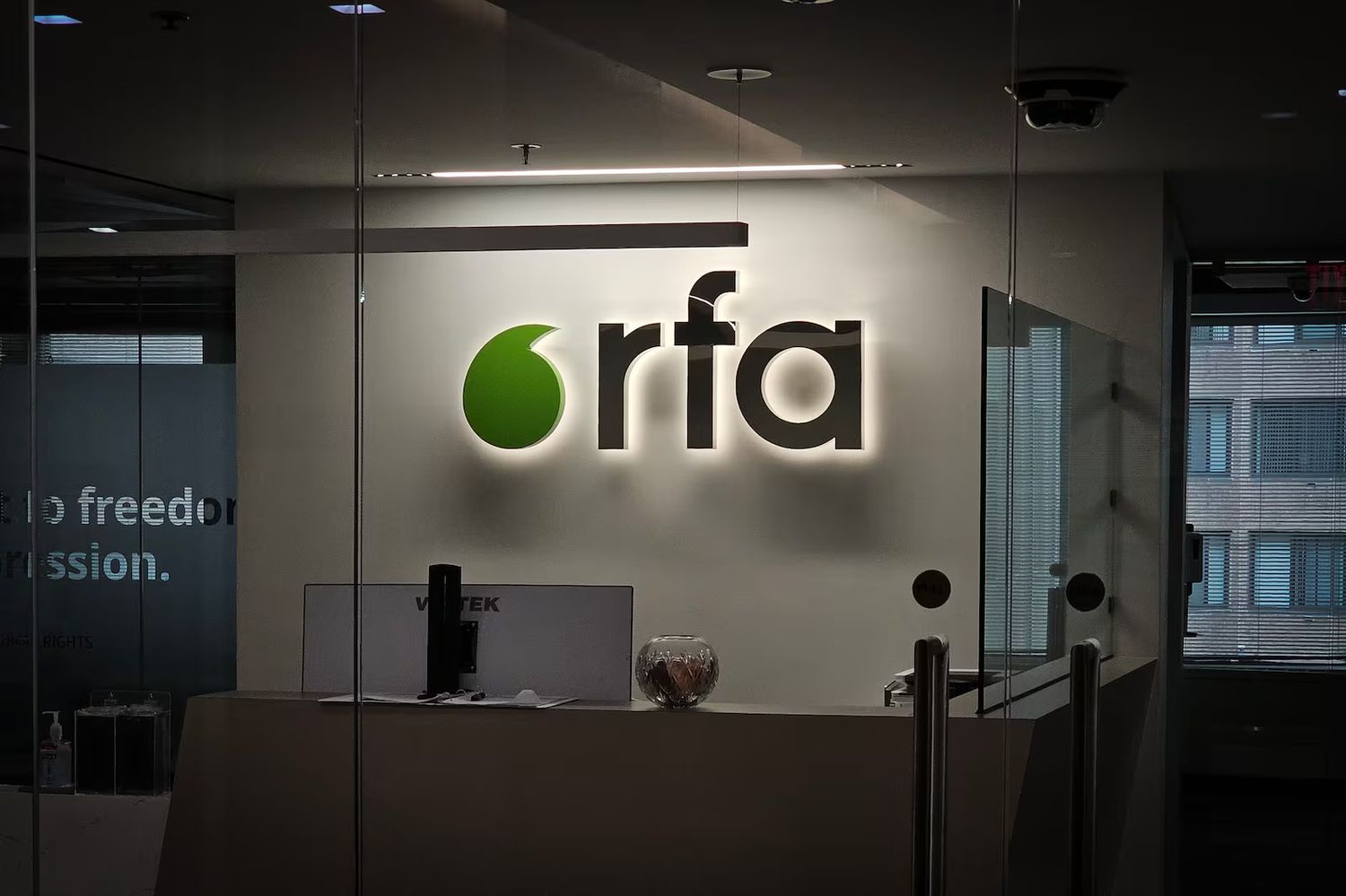
WASHINGTON — Radio Free Asia (RFA) said this week it has resumed broadcasting to audiences inside China, including in the Uyghur language, though the effort remains limited as the organization works to rebuild after last year’s shutdown of several language services.
In a statement issued earlier this week, RFA President and CEO Bay Fang said the broadcaster was “back in business” and had restarted transmissions through private contracting with transmission providers. She pointed to renewed congressional funding under the FY2026 spending package signed by President Donald Trump as a key factor.
However, an RFA spokesperson said the effort is still in its early stages.
“It’s still nascent and a small operation. We hope that once enacted funding is disbursed we can build back up,” Chief Communications Officer Rohit Mahajan told Uyghur News Network.
Mahajan said the long-term goal is to expand Uyghur programming once funding is fully disbursed.
“RFA’s goal is to build up its Uyghur content production and programming. That relies on the consistent disbursement of appropriated funds as signed into law. Right now the operation is small, but with resources we anticipate rebuilding its capacity to ensure Uyghurs in China who have relied on RFA’s reporting have access to the truth,” he said.
RFA’s return follows major funding cuts in 2025 that forced the U.S.-funded outlet to largely cease operations, lay off staff and shut down overseas bureaus. The cuts affected Radio Free Asia and other broadcasters overseen by the U.S. Agency for Global Media.
A bipartisan spending bill signed earlier this month allocated $653 million to USAGM — less than in previous years but far more than the $153 million previously proposed to wind down the agency.
New Uyghur-language content is produced once a week and broadcast via satellite. RFA has not publicly detailed arrangements for its other language services.
After RFA stopped using its shortwave frequencies in 2025, China expanded state radio broadcasts to fill the gap and increase propaganda targeting the Uyghur region, a Washington Post report found. Analysts said the cuts created a growing information vacuum in areas where independent reporting is tightly restricted.
Founded in 1998, RFA’s Uyghur Service was shut down in May 2025. Before its closure, it aired up to an hour of daily shortwave programming into the region and operated a full newsroom producing regular multimedia reporting.
Advocacy organizations welcomed the return of broadcasts but urged full restoration of capacity. The Campaign for Uyghurs said the shutdown created a significant information vacuum and called for rebuilding the Uyghur Service at a robust level.
For audiences in the Uyghur region — where independent journalism is effectively absent and dissent is harshly punished — the distinction between symbolic and fully restored operations remains significant.
China’s embassy in Washington criticized RFA and accused the broadcaster of anti-China bias, according to Reuters.
RFA has not provided a timeline for when full operations might resume.














Be First to Comment