
Demonstrations across four continents commemorated the 1997 Ghulja crackdown and called for greater global attention to Uyghur rights.
WASHINGTON (UNN)— Uyghurs and their supporters worldwide marked the anniversary of the 1997 Ghulja Massacre this week through demonstrations and public statements across multiple continents. The observances honored victims of the crackdown and drew attention to human-rights conditions in China’s far-western Xinjiang Uyghur Autonomous Region. Many Uyghurs refer to the region as East Turkistan.
The anniversary marks the February 5, 1997 Ghulja Massacre, when Chinese security forces suppressed a peaceful Uyghur demonstration, according to witnesses and human-rights groups. The events are widely regarded by researchers as an early turning point in tensions between Uyghurs and Chinese authorities, drawing international attention years before the region became a major global human-rights concern.
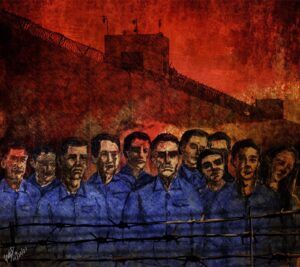
The massacre refers to the violent suppression of protests in the city of Ghulja, where demonstrators had gathered amid restrictions on cultural and religious expression. Security forces used water cannons and live fire to disperse crowds.
Casualty figures remain disputed. Chinese authorities reported about 9 or 10 deaths and nearly 200 injuries, while organizations including Amnesty International and the Uyghur Human Rights Project have said the toll was significantly higher, with dozens or possibly hundreds killed and thousands detained in the aftermath.
Scholars and human-rights organizations have cited the Ghulja crackdown as an early sign of tensions that later drew sustained international attention to the region.
In a statement marking the anniversary, Rushan Abbas, founder and executive director of the Campaign for Uyghurs, said, “The Ghulja Massacre was a pivotal moment when the world could have recognized China’s trajectory toward genocide and chose silence instead. That silence emboldened the CCP to expand its crimes into the systematic atrocities we witness today.”
In a separate statement, World Uyghur Congress President Turgunjan Alawdun said, “This was one of the most violent crackdowns by the Chinese authorities against Uyghurs. The Uyghur identity was seen as a threat by the Chinese authorities, and still is today.”
Some organizations held demonstrations, while others commemorated the anniversary through public statements.
In Washington, supporters of the East Turkistan Government in Exile gathered near the United States Department of State, waving blue East Turkistan flags and calling for policy action.
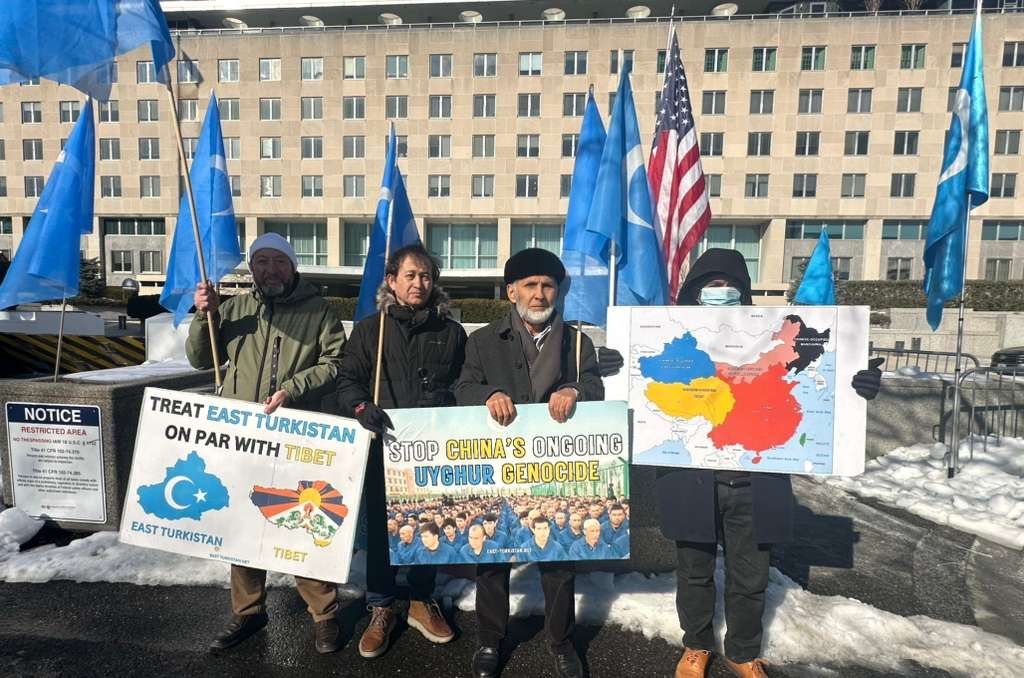
Salih Hudayar, the group’s foreign minister, said the Ghulja events should be understood within a broader historical framework.
“The Ghulja Massacre was not an isolated tragedy but part of a continuous colonial project,” Hudayar said.
He urged the United States to take stronger measures, including recognizing East Turkistan as occupied territory and expanding accountability related to forced labor and other alleged abuses.
In London, demonstrators assembled outside the Chinese Embassy despite heavy rain, holding signs and chanting slogans calling for freedom for Uyghurs.
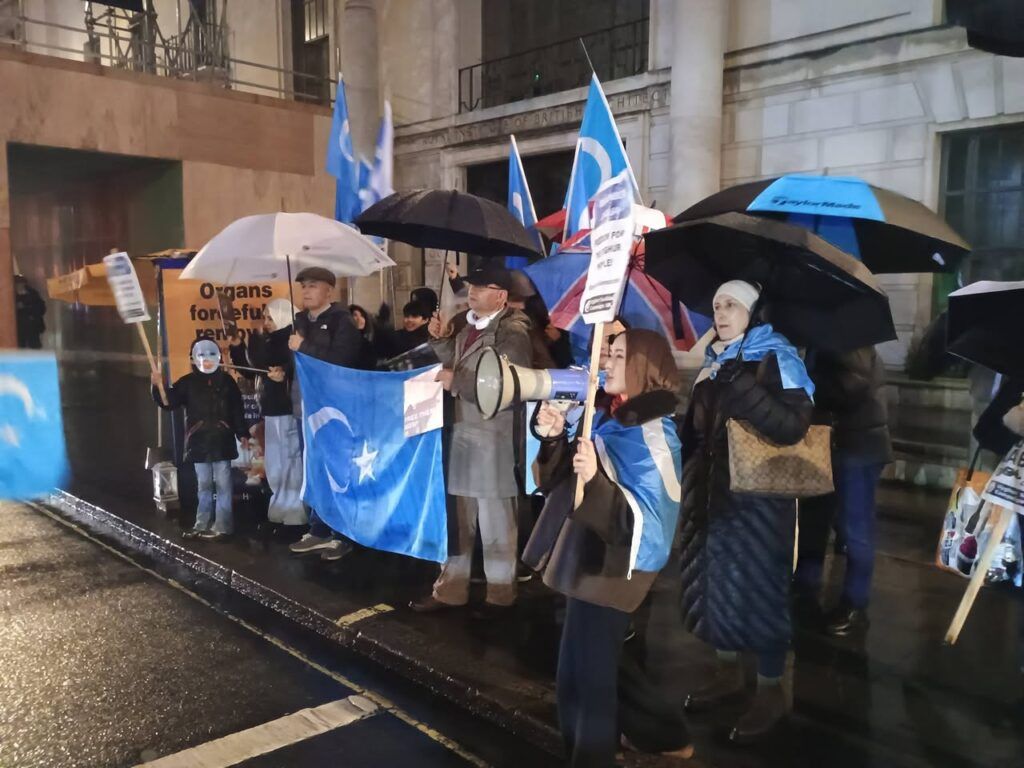
Organizers said the gathering sought “to remember the victims of the Ghulja massacre … and to demand freedom for the Uyghur people,” as protesters chanted, “China, China, can you hear us? Freedom, freedom for the Uyghurs!”
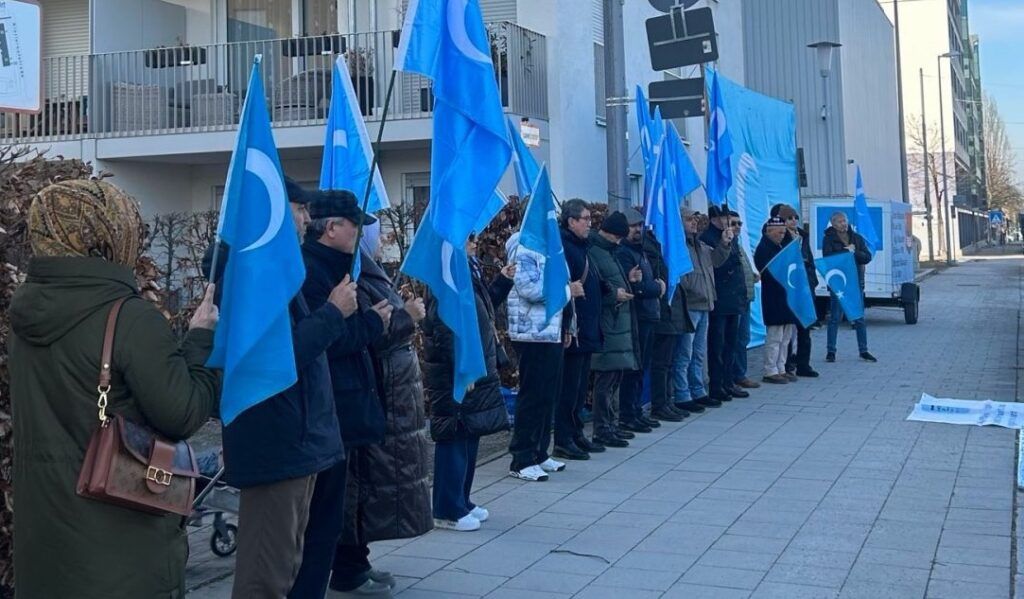
In Munich, activists rallied outside the Chinese Consulate. Among those attending was Dolkun Isa, former president of the World Uyghur Congress, who wrote afterward: “We have not forgotten. We will not be silenced. Our struggle for justice continues.”
In Sydney, a demonstration organized by the Australian Uyghur Association and the World Uyghur Congress called on Chinese authorities to close detention facilities, release prisoners, and allow Uyghurs to practice their language, culture, and religion freely.
Speakers also urged the Australian government to formally recognize what they described as genocide, ban imports linked to forced labor, and impose targeted sanctions on those responsible. The rally concluded with chants of “Stop genocide” and “Freedom for Uyghurs.”
The demonstrations underscored how the memory of Ghulja continues to mobilize Uyghur communities across continents nearly three decades after the events.
In 2021, then-U.S. Secretary of State Michael Pompeo determined that “China’s actions in Xinjiang constituted genocide and crimes against humanity”, a designation that Beijing denies
The anniversary comes amid ongoing international scrutiny of China’s policies toward Uyghurs, an issue that has increasingly influenced diplomatic relations and human-rights debates in recent years.
For many in the diaspora, the anniversary has become both an act of remembrance and a reflection of continuing concerns over cultural repression and religious restrictions in the region.







Be First to Comment