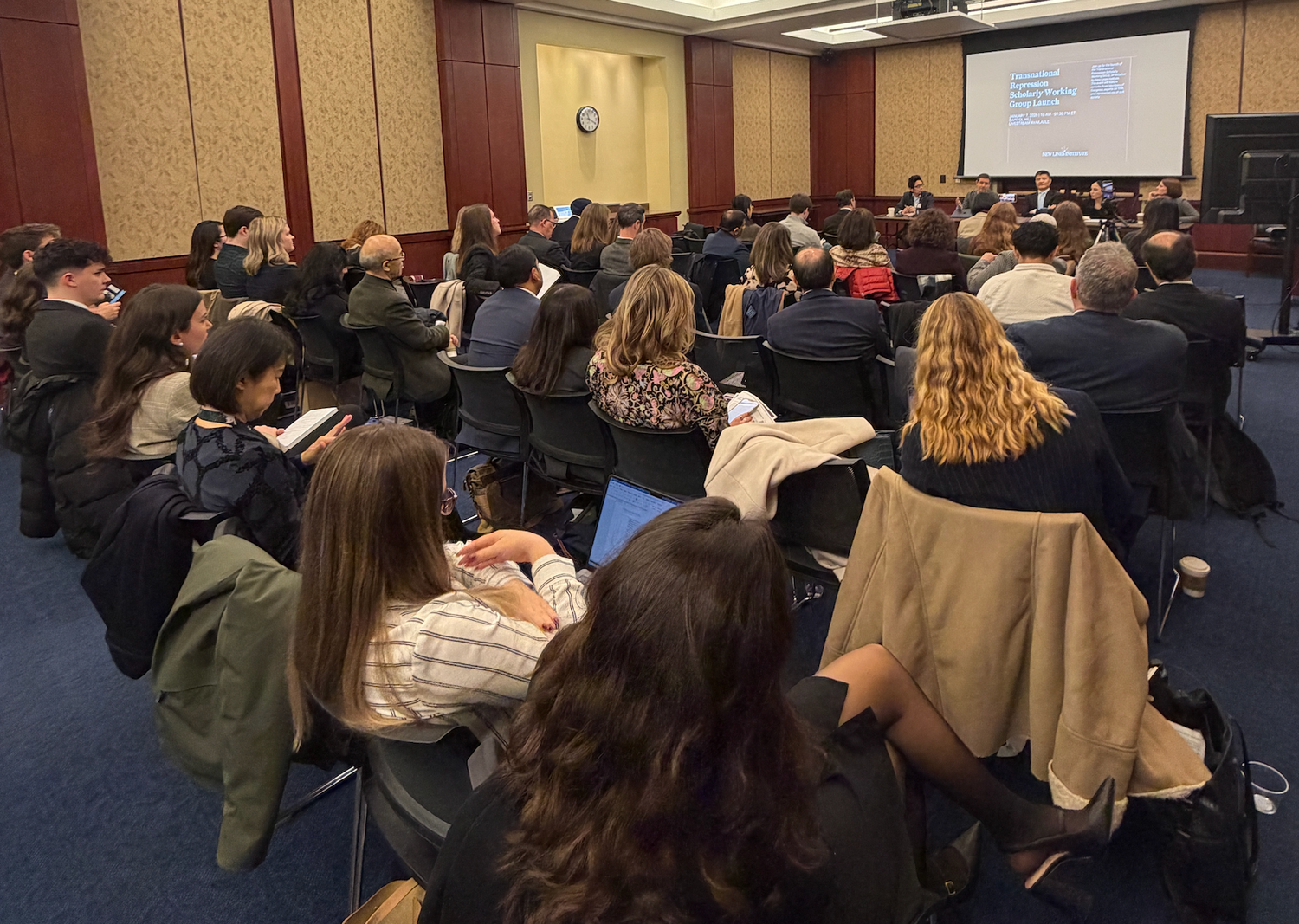
WASHINGTON (UNN)— The New Lines Institute for Strategy and Policy on Tuesday launched a Transnational Repression Scholarly Working Group, as concerns grow over foreign governments targeting dissidents and diaspora communities beyond their borders.
The group brings together U.S. lawmakers, legal experts and researchers to look at cases of transnational repression in the United States and Europe and to explore possible legal and policy responses.
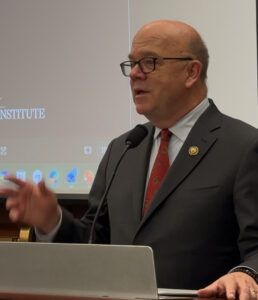
Much of the discussion focused on the Uyghur case. Speakers pointed to what they described as efforts by the Chinese government to intimidate Uyghurs living overseas. U.S. Rep. Jim McGovern, co-chair of the Tom Lantos Human Rights Commission, delivered the keynote address and referenced a 2021 institute report assessing China’s treatment of Uyghurs under the 1948 Genocide Convention. He said the report helped build congressional support for the Uyghur Forced Labor Prevention Act.
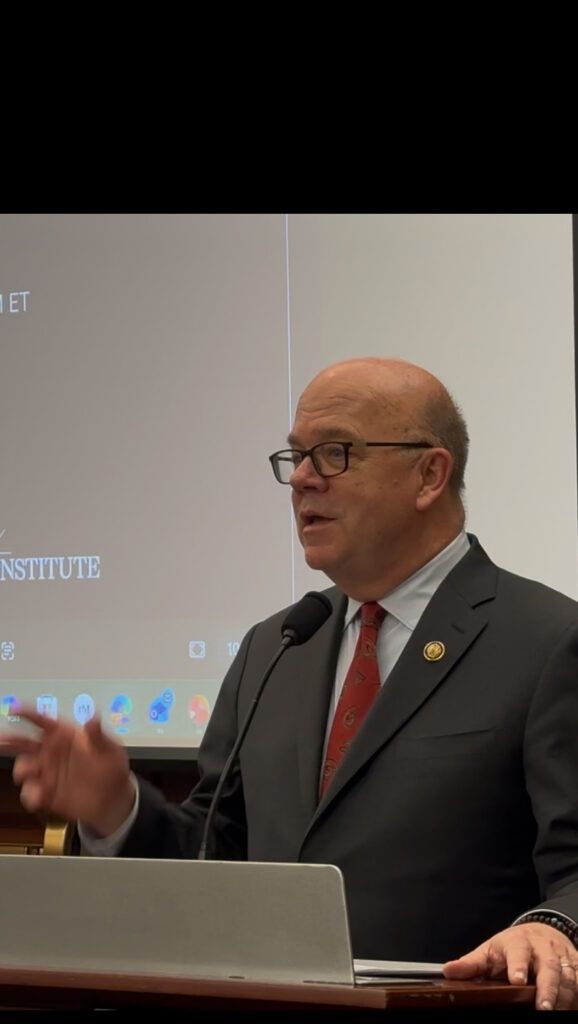
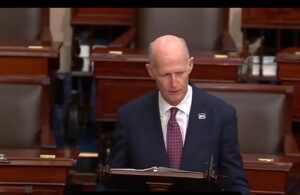
U.S. Rep. James McGovern, co-chair of the Tom Lantos Human Rights Commission, delivers the keynote address during the launch of the Transnational Repression Scholarly Working Group on Capitol Hill in Washington, Jan. 7, 2025. (UNN)
“Yet today, the Uyghur people continue to suffer—often as victims of transnational repression,”
“Yet today, the Uyghur people continue to suffer—often as victims of transnational repression,” McGovern said. He pointed to journalists and staff of the Radio Free Asia Uyghur Service, noting that Chinese authorities have detained relatives of Uyghur journalists in retaliation for their work. McGovern also criticized the Trump administration’s decision to defund the service, calling it a move that risks re-victimizing those already affected by transnational repression.
McGovern urged Congress to advance legislation that would formally define transnational repression in U.S. law and improve interagency coordination, saying the issue affects communities well beyond the Uyghur case. He cited testimony involving victims from Hong Kong, Kazakhstan, India and Pakistan and warned against inconsistent responses by policymakers. “We need action—and we need it now,” he said.
In remarks following the event, McGovern addressed the Uyghur community directly, saying lawmakers remain aware of transnational repression targeting Uyghur advocates in the United States. Asked by Uyghur News Network whether he had a message for Uyghur journalists and media workers who recently lost their jobs, McGovern said Congress should continue to support independent journalism and human rights accountability.
“We want to have you back,” he said. “We are not going to forget what they’ve gone through.”
Speaking at the conference, Azeem Ibrahim, chief strategy officer of the New Lines Institute, said the working group aims to bridge long-standing gaps between research and policy. He described transnational repression as a global challenge requiring coordinated democratic responses.
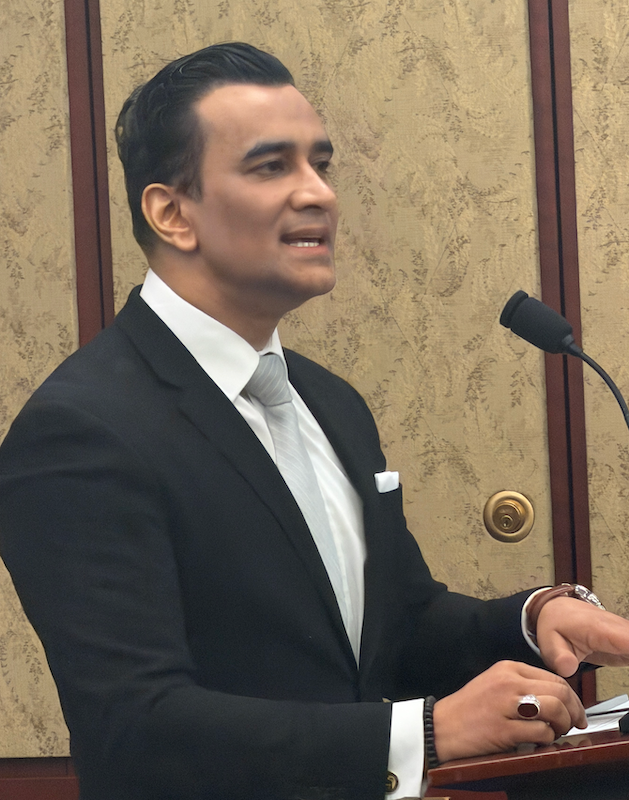
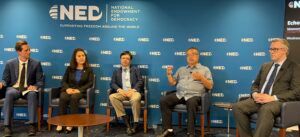
Dr. Azeem Ibrahim, chief strategy officer of the New Lines Institute for Strategy and Policy, delivers remarks during the launch of the Transnational Repression Scholarly Working Group on Capitol Hill in Washington, Jan. 7, 2025. (UNN)
“Today’s launch here in Washington is only the beginning,” Ibrahim said, adding that the institute plans to convene the working group in democratic capitals including London, Brussels, Ottawa and Melbourne. Each launch, he said, will engage local lawmakers, civil society organizations and affected communities.
“Transnational repression is designed to make people feel isolated, powerless and invisible,” Ibrahim said, adding that democracies must confront the issue systematically to protect the integrity of democratic space.
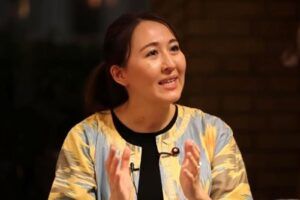
Panel discussions examined the real-world impacts of transnational repression on diaspora communities. Ajinur Setiwaldi, Esq., an independent researcher focusing on Uyghur human rights and transnational repression, said Chinese authorities are promoting a narrative that conditions in the Uyghur region are returning to normal while continuing coercive practices at home and abroad.
She described what she called a “carrot-and-stick” approach, citing reports documenting cooperation with Turkish authorities that has left some Uyghurs in legal limbo and more vulnerable to detention or onward deportation through third countries.
She warned that a draft National Ethnic Unity Law under review in China could further expand Beijing’s reach overseas by holding individuals and organizations outside the country legally accountable for actions deemed to undermine national unity.
Addressing the human toll of transnational repression, Elise Anderson, a nonresident senior fellow at the institute, said Uyghurs living in politically unstable third countries have long faced the risk of refoulement to China. She cited cases in Southeast Asia and said some Uyghurs abroad have also been targeted through politically motivated Interpol notices and reported threats to their safety.
“The effects have been detrimental,” Anderson said, pointing to widespread reports of depression and anxiety within the Uyghur diaspora and noting that some advocates have withdrawn from public activism due to fear. She added that similar patterns of transnational repression affect other communities, including Tibetans she met during research travel in South Asia.
Concerns about state abuse of Interpol Red Notices and efforts to challenge and remove politically motivated notices from the system were also raised by Sandra Grossman, Esq., a partner at Grossman Young & Hammond, who discussed legal strategies used to contest such cases.
Speaking during the panel on legislative responses, Deanna Pelsang, a researcher at the Congressional-Executive Commission on China, said transnational repression requires a comprehensive legislative response because of its scale and coordination.
“People’s Republic of China is by far the most prolific perpetrator”
Pelsang said research by the commission and other organizations shows that the “People’s Republic of China is by far the most prolific perpetrator” of transnational repression globally, citing its sustained use of intimidation, harassment and surveillance against critics and diaspora communities abroad.
She said China’s use of transnational repression reflects what she described as a “whole-of-government” approach, involving senior Communist Party leaders as well as security agencies, consular officials and other actors overseas. That scale of coordination, she said, requires a similarly coordinated response from the United States, including clearer legal definitions, stronger interagency cooperation and improved law enforcement training.
At the end of the event, Ibrahim told Uyghur News Network that the working group’s goal is to convene scholars from around the world to coordinate research and translate it into actionable policy recommendations for democratic governments.
“Transnational repression is, by definition, across borders,” Ibrahim said. “Countries need to work together to understand how these practices have evolved and how they can protect people from them.”
The panels also included Chinese, Tibetan and human rights researchers, as well as legal experts, who examined issues ranging from alleged abuses of Interpol mechanisms such as Red Notices to legislative pathways for advancing responses to transnational repression in the U.S. Congress and other democratic systems.
In 2021, the New Lines Institute for Strategy and Policy concluded that China bears responsibility for genocide against Uyghurs, a determination later echoed by the U.S. State Department. The Transnational Repression Policy Act would define and address such abuses in U.S. law.





Be First to Comment