
The White House said the United States carried out a military operation in Venezuela, an assertion that quickly drew attention in Beijing, where China has deep political and economic ties to President Nicolás Maduro.
Speaking at a news conference at his Mar-a-Lago residence in Florida, Donald Trump said U.S. armed forces had conducted an overnight military operation in Venezuela’s capital, using what he described as overwhelming air, land, and sea power to strike targets in Caracas.
Mr. Trump said the operation rendered Venezuela’s military capabilities powerless and resulted in the capture of Mr. Maduro and his wife, Cilia Flores. He said the assault was carried out under cover of darkness and left large parts of Caracas without electricity because of U.S. technical capabilities.
Mr. Trump said Mr. Maduro and Ms. Flores are in U.S. custody and face narco-terrorism charges in New York. The claims could not be independently verified but were later echoed by senior U.S. officials.
China’s Immediate Response
After Mr. Trump posted on Truth Social on Saturday morning that the United States had carried out a large-scale strike in Venezuela and captured President Nicolás Maduro, the statements prompted an unusually swift and forceful response from China, Venezuela’s most important economic and diplomatic backer.
In a statement posted on X, a spokesperson for the Chinese Ministry of Foreign Affairs said Beijing was deeply shocked and strongly condemned what it described as the United States’ use of force against a sovereign state and its president. The statement accused Washington of violating international law, undermining Venezuela’s sovereignty, and threatening peace and stability in Latin America and the Caribbean.
Russian officials also criticized the U.S. account, reiterating Moscow’s long-standing opposition to American sanctions and military pressure on Venezuela. While Russia’s economic exposure is smaller than China’s, Moscow has maintained close military and security ties with Caracas, including arms sales, training cooperation, and diplomatic coordination.
The timing of China’s response drew particular attention among diplomats and analysts.
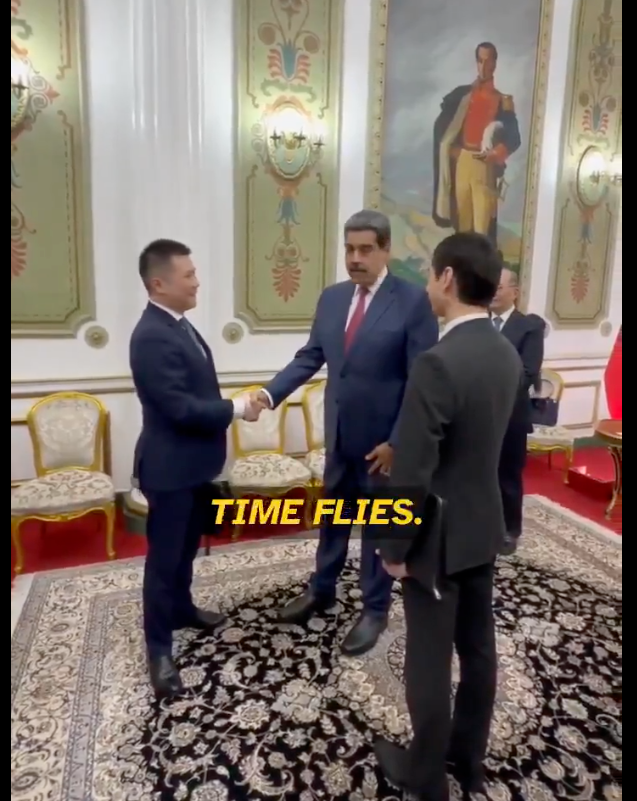
Venezuelan state media reported that a Chinese government delegation was in Caracas at the time of the reported U.S. strike on the capital. Hours later, state television aired footage showing Mr. Maduro receiving a Chinese representative at the presidential palace, a public display of diplomatic support.
China’s Stakes, and Russia’s Role
China’s sensitivity to events in Venezuela reflects years of deep political and economic involvement.
Since the mid-2000s, particularly as Venezuela’s relations with Washington deteriorated under Hugo Chávez and later Mr. Maduro, Beijing emerged as Caracas’s most consistent external supporter. Chinese state banks extended tens of billions of dollars in loans, many structured as oil-for-debt arrangements that secured long-term crude supplies, often at discounted prices.
China also provided diplomatic backing, defended Venezuela in international forums, and criticized U.S. sanctions as interference in domestic affairs. Chinese firms became involved in Venezuela’s telecommunications and surveillance infrastructure, further entrenching Beijing’s presence.
Russia’s engagement followed a different path. Moscow focused less on large-scale financing and more on strategic alignment, arms transfers, and political signaling. Venezuela became one of Russia’s closest partners in the Western Hemisphere, offering Moscow an opportunity to challenge U.S. influence near its borders at relatively low economic cost.
Although Venezuela’s collapsing oil production strained its relationships with both countries, China has remained the primary destination for much of the country’s crude exports under sanctions. That position has left Beijing especially exposed to political change in Caracas.
Energy, Exposure, and Strategic Risk
That exposure helps explain the intensity of China’s response.
Much of China’s lending to Venezuela is tied to oil-backed repayment agreements negotiated with the Maduro government. Analysts say a change in leadership could place those arrangements at risk. A new administration might challenge the legality of existing debts or reopen the energy sector to Western oil companies, potentially leaving Beijing facing billions of dollars in losses and sharply reduced influence.
Anders Corr, a China analyst and founder of Corr Analytics, said the economic consequences for Beijing could be significant.
“China consumes most of Venezuela’s oil exports at a discount to global prices due to sanctions,” Mr. Corr said. “A transition to a pro-U.S. government selling oil at market prices would make energy more expensive for China and put downward pressure on oil prices elsewhere.”
Russia, while less exposed financially, would also face a setback. The loss of a friendly government in Caracas would reduce Moscow’s political footprint in Latin America and weaken one of its few remaining allies in the region.
Some observers focused on China’s internal politics and security posture said the episode could carry broader symbolic weight in Beijing.
Ilshat Hasan Kokbore, an independent researcher and Uyghur observer, described the reported U.S. action as a shock to China’s leadership and strategic thinking.
“This is a shockwave for the Chinese government and for Xi Jinping’s rule,” Mr. Kokbore said. “It disrupts the Chinese Communist Party’s strategy of expanding influence into what it sees as the United States’ backyard.”
The timing also matters. Just weeks ago, China’s military conducted large-scale exercises around Taiwan to project strength, especially toward the United States. Now Beijing sees that Washington is serious about confronting aggression.”
Analysts cautioned that it remains too early to assess how China’s leadership will interpret the episode over the longer term or how it might factor into Beijing’s approach to regional security.
A Moment Under Scrutiny
Taken together, the White House account, the sharply worded response from China, and more measured criticism from Russia suggest the episode is being closely examined in both Beijing and Moscow, though for different reasons. For China, the focus is on protecting investments, energy supplies, and long-term influence. For Russia, the concern is maintaining strategic relevance and opposing U.S. power projection.
Analysts said China’s vulnerability in the episode stems in part from its reliance on foreign energy. Gordon Chang, a China expert and senior fellow at the Gatestone Institute, argued that disruptions involving oil-rich partners such as Venezuela could complicate Beijing’s broader strategic ambitions.
Russia, while less exposed financially, would also face a setback. The loss of a friendly government in Caracas would reduce Moscow’s political footprint in Latin America and weaken one of its few remaining allies in the region.
In both cases, Venezuela has served as a key outpost in challenging American influence, even as analysts cautioned that it was too early to draw conclusions about how the episode might affect Beijing’s posture on broader issues, including its approach to Taiwan.



Be First to Comment